DSCR Loans for Real Estate Investors: Why Your Business Credit Still Matters
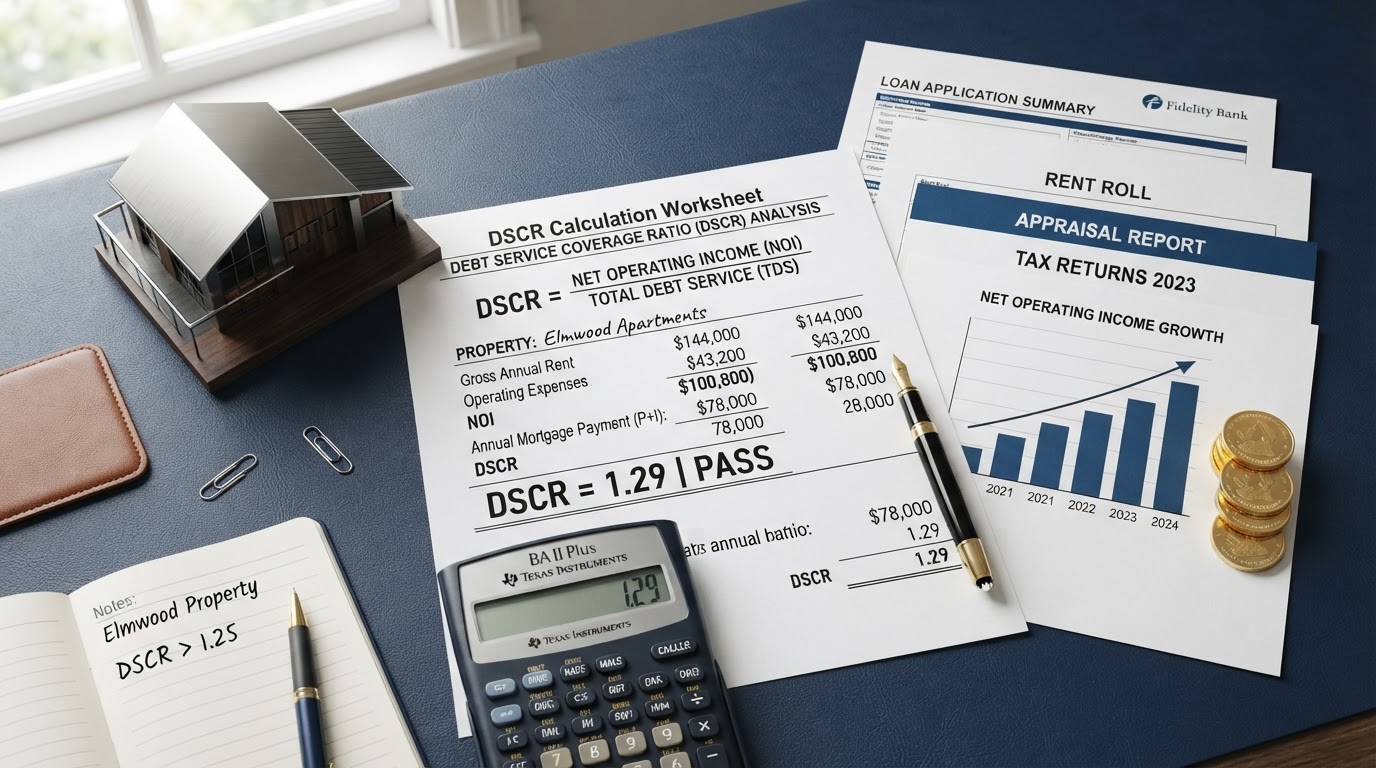
Real estate investors often hear that a DSCR loan is the financing that finally ignores their personal income — and that is half true. The Debt Service Coverage Ratio loan qualifies a borrower on the cash flow of the investment property rather than on personal W-2 income, which makes it a powerful tool for investors whose tax returns do not reflect their real borrowing power. But Damon Boswell is quick to correct the second half of the assumption: a DSCR loan does not ignore credit, and it does not ignore the strength of the entity behind the application. At ASAP Business Credit, Damon Boswell and Ashley Boswell treat the DSCR loan as a Tier 4 instrument that rewards a business profile built deliberately — because the stronger the file behind the application, the better the rate, the lower the down payment, and the wider the pool of lenders who will compete for the deal. Here is how the DSCR loan works, what the ratio actually measures, why credit still gates the rate, and how Ashley Boswell and Damon Boswell build the profile that makes every DSCR application stronger.
What a DSCR Loan Actually Is
Ashley Boswell defines the DSCR loan plainly. A Debt Service Coverage Ratio loan is an investment-property loan that qualifies the borrower based on the property's rental income rather than the borrower's personal income and assets. Instead of underwriting the borrower's debt-to-income ratio from tax returns, the lender underwrites the property itself — dividing the property's net operating income, or in the residential version its gross rental income, by the annual debt service, which includes principal, interest, taxes, insurance, and association fees. The resulting ratio tells the lender whether the property's income covers its own mortgage. Damon Boswell stresses that the DSCR loan is not available for a primary residence — it is built for investment properties, and its entire logic rests on the property paying for itself.
- A DSCR loan qualifies the borrower on the property's rental income, not personal W-2 income.
- The ratio divides the property's income by its annual debt service (principal, interest, taxes, insurance, HOA).
- It is designed for investment properties — not primary residences.
- The property's own cash flow, not the borrower's tax return, drives the underwriting decision.
How the Ratio Is Calculated
Damon Boswell walks through the arithmetic because the number is the entire decision. The DSCR is the property's gross rental income divided by its annual debt service. If a property generates $2,200 a month in rent, that is $26,400 a year. If the monthly mortgage payment including taxes and insurance is $1,760, that is $21,120 a year in debt service. Dividing $26,400 by $21,120 yields a DSCR of 1.25 — meaning the property generates 25% more income than its debt service costs. A DSCR of 1.0 is break-even: the rent exactly covers the debt. Below 1.0, the property does not cover its own mortgage, and most lenders will not approve the loan or will price it aggressively. Ashley Boswell coaches investors to target a DSCR of 1.25 or higher, because that is the threshold where the widest pool of lenders competes and the best rates appear.
"The DSCR is the property's report card. A 1.25 says the property earns 25% more than it costs to carry — and that is the number that opens the lender's door widest."
— Damon Boswell, Master Business Credit Architect
The Minimum Ratio Lenders Require
Ashley Boswell maps the thresholds because they shift the terms. Most lenders require a minimum DSCR between 1.0 and 1.25, with 1.25 or higher considered ideal. Some lenders will accept ratios as low as 0.80 to 0.95, but those loans come with higher interest rates, larger down payments, and stricter reserve requirements — the lender is pricing the risk of a property that does not fully cover its debt. Higher DSCR ratios of 1.5 or above can help secure lower interest rates and better terms, because the property's income cushion gives the lender confidence the loan will perform even if rents soften. Damon Boswell's rule is that the ratio is not just a pass-fail gate; it is a pricing dial, and every tenth of a point the investor adds to the DSCR lowers the cost of the capital.
- Most lenders require a minimum DSCR of 1.0 to 1.25, with 1.25 or higher ideal.
- Ratios as low as 0.80 to 0.95 may be accepted but carry higher rates and larger down payments.
- A DSCR of 1.5 or above can unlock lower interest rates and better terms.
- Every tenth of a point added to the DSCR lowers the cost of the capital.
Why Credit Still Gates the Rate
Damon Boswell addresses the misconception directly, because it costs investors who plan around it. A DSCR loan removes the personal income qualification, but it does not remove the credit qualification. Lenders still pull credit, and most require a minimum credit score in the 620 to 680 range to qualify — with the higher the score, the better the interest rate and loan terms. The credit score is the lender's backstop: the property's income covers the debt, but the borrower's credit tells the lender whether the borrower manages obligations responsibly. Ashley Boswell reminds investors that a weak credit file can still sink a DSCR application even when the property's ratio is strong, which is exactly why the ASAP framework builds both the business profile and protects the personal file — because the DSCR lender reads both.
How the ASAP Framework Strengthens a DSCR Application
Ashley Boswell sequences the build with the DSCR lender's underwriting in mind. The DSCR loan is a Tier 4 instrument, which means it sits at the top of the framework — and the profile built through Tiers 1 through 3 is what makes the application competitive. A business entity in good standing with a verifiable EIN, a clean business credit file across all three bureaus, and a personal credit file that is low-utilization and dispute-free together give the DSCR lender every reason to offer the best rate. Damon Boswell also coaches investors to hold the property in the entity, not in their personal name, because the entity structure is what allows the business credit profile to support the application rather than leaving the personal file to carry it alone. The DSCR loan qualifies on the property's income — but the profile behind the application decides the price.
"The DSCR loan qualifies on the property's income. The profile behind the application decides the price. We build the profile so the price is the one the investor actually deserves."
— Ashley Boswell, Business Credit Advisor
Build the Profile, Then Buy the Property
A DSCR loan can be the cleanest path to investment-property financing for an investor whose income does not show on a W-2 — but it still rewards a business profile built deliberately. If you are an investor preparing for your next acquisition, schedule a free consultation with Damon Boswell and Ashley Boswell today. We will audit your current standing across all three business bureaus, assess the strength of your entity and personal file, and show you exactly how the ASAP framework positions your profile so every DSCR application unlocks the best rate the property can earn.
Ready to build your business credit profile?
Damon Boswell & Ashley Boswell and the ASAP Business Credit team will map your business to the right tier — and show you exactly how much capital you qualify for.
Schedule Your Free Consultation