Business Credit-Builder Loans: How They Work and Whether You Actually Need One
Among the tools Damon Boswell and Ashley Boswell evaluate for every client, the business credit-builder loan is one of the most misunderstood. Some advisors treat it as a magic shortcut to a strong profile; others dismiss it entirely. The truth, as Damon Boswell explains it, is that a credit-builder loan is a precision instrument — powerful in the right situation, unnecessary in others, and never a substitute for the disciplined tradeline sequencing that forms the backbone of the ASAP Business Credit framework. Here is exactly how business credit-builder loans work, what they do to your profile, and how Ashley Boswell and Damon Boswell decide whether a client actually needs one.
How a Credit-Builder Loan Actually Works
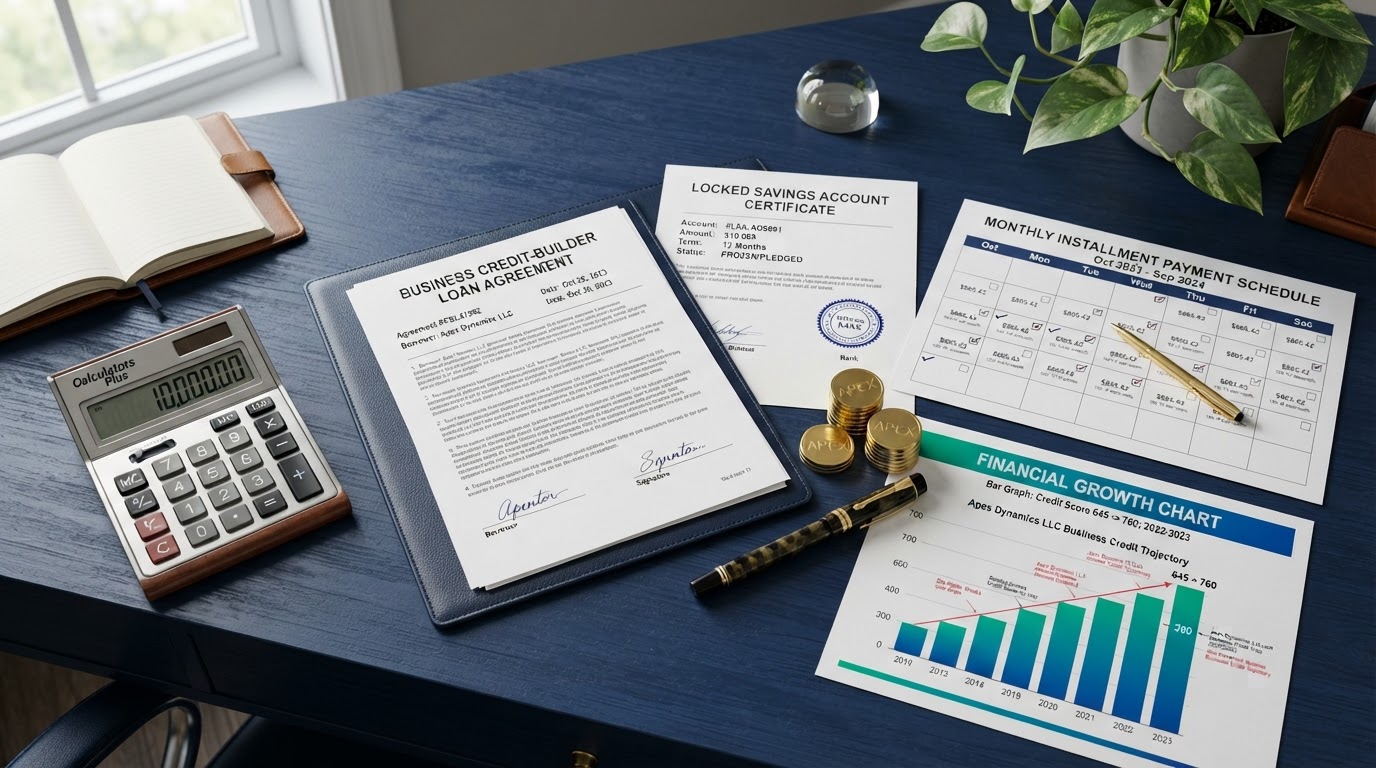
Ashley Boswell walks clients through the mechanics, because the structure is unlike a traditional loan and that difference matters. With a traditional loan, you receive the funds upfront and repay them over time. With a credit-builder loan, the process is reversed. The lender approves a loan amount — typically ranging from around $300 to $1,000 — and places that money in a locked savings account or certificate of deposit in your name. You do not receive the funds. Instead, you make fixed monthly payments, plus interest, over a set term that usually runs from 6 to 24 months. Each payment is reported to the credit bureaus as on-time installment activity. Once the loan is fully repaid, you receive the loan amount, plus any interest earned on the savings while it was locked. The lender earns interest; you build a positive payment history and walk away with the saved balance.
- The lender places the loan amount in a locked savings account — you do not receive funds upfront.
- You make fixed monthly payments over a term that typically runs 6 to 24 months.
- Each payment is reported to the credit bureaus as on-time installment activity.
- Once repaid, you receive the loan amount plus any interest earned on the savings.
Why It Builds Credit
Damon Boswell explains that a credit-builder loan builds credit for one simple reason: it generates a stream of reported, on-time installment payments, and payment history is the single largest factor in most credit scoring models. On consumer credit, payment history makes up roughly 35% of a FICO score. On business credit, the weight varies by bureau, but the principle holds — a sustained record of on-time payments is the most powerful evidence a profile can present. The advantage of the credit-builder structure is that the lender holds the funds, which means the risk is minimal and approval is accessible even for thin or damaged profiles. The disadvantage is that you do not have use of the money while you build the credit, which is why Damon Boswell treats it as a targeted tool rather than a primary strategy.
"A credit-builder loan is a savings account wearing a loan's clothes. You are not borrowing money — you are buying a payment history, and the price is patience."
— Damon Boswell, Master Business Credit Architect
The Critical Question: Does the Lender Report to Business Bureaus?
Ashley Boswell stresses the single most important detail, because it determines whether the loan builds business credit or personal credit. A credit-builder loan only builds your business credit profile if the lender reports your payments to the commercial bureaus — Dun & Bradstreet, Experian Business, or Equifax Business. Many credit-builder loans on the market report only to consumer bureaus, which means they build personal credit and do nothing for your business profile. Before Damon Boswell ever recommends a credit-builder loan, he confirms in writing that the lender reports to the business bureaus. A loan that reports only to personal credit defeats the entire purpose of building a profile on the EIN with personal credit protected.
- A credit-builder loan only builds business credit if the lender reports to commercial bureaus.
- Many credit-builder loans report only to consumer bureaus and build personal credit instead.
- Confirm reporting in writing before committing to any credit-builder product.
- A loan that reports to personal credit defeats the purpose of building a profile on the EIN.
When the ASAP Framework Uses a Credit-Builder Loan
Damon Boswell is selective about when a credit-builder loan enters a client's plan, because the ASAP framework is built primarily on reporting tradelines — Net-30 vendors, revolving store credit, fleet cards, and bank-level funding — that build the profile while also providing real operational utility. A credit-builder loan provides no operational utility; it is pure credit-building. Ashley Boswell introduces one in specific situations: when a profile is too thin for tradeline approval and needs a reported installment history to qualify, when a client wants to add an installment tradeline alongside revolving tradelines to diversify the credit mix, or when a damaged profile needs a guaranteed stream of positive payment history to offset older negatives. In each case, the loan is a supplement to the framework, never a replacement for it.
Credit-Builder Loans vs. Secured Business Credit Cards
Ashley Boswell frequently compares credit-builder loans to secured business credit cards, because clients often choose between the two. A secured business credit card requires a refundable security deposit that becomes your credit limit, and you use the card for real purchases while payments report to the bureaus. Like the credit-builder loan, it is accessible for thin profiles. The difference is utility — a secured card can be used for actual business spending, while a credit-builder loan locks the funds away. Damon Boswell often prefers a secured card that reports to all three bureaus — like the FNBO Business Edition Secured Mastercard — because it builds revolving credit history while remaining operational. The credit-builder loan is reserved for the specific cases where an installment tradeline is what the profile needs.
"We never recommend a tool because it is popular. We recommend it because the profile in front of us needs exactly what it does — and nothing else."
— Ashley Boswell, Business Credit Advisor
- Secured business credit cards build revolving credit while remaining operational for spending.
- Credit-builder loans build installment credit but lock the funds until the term ends.
- A secured card reporting to all three bureaus often does more for the profile per dollar.
- The credit-builder loan is reserved for profiles that specifically need an installment tradeline.
The Risks of Getting It Wrong
Damon Boswell is honest about the risks. The first is missed payments — because the lender reports every payment, a single missed installment reports as a negative and sets the profile back, which is why autopay is non-negotiable if a credit-builder loan is used. The second is fees and interest that exceed the value of the credit built, which is why Ashley Boswell compares the total cost against the profile benefit before recommending any product. The third is the opportunity cost of locked funds — money sitting in a locked savings account is money not deployed in the business, which matters for cash-strapped operations. The ASAP framework weighs each of these before a credit-builder loan ever enters a plan.
Build the Profile the Right Way
A business credit-builder loan can be a valuable tool — in the right situation, with the right lender, and for the right profile. If you are ready to find out whether your business actually needs one, schedule a free consultation with Damon Boswell and Ashley Boswell today. We will audit your current standing across all three bureaus, determine whether a credit-builder loan would accelerate your timeline or whether tradelines alone will carry you to Tier 4, and show you exactly how much capital your business can qualify for — all on your EIN, with your personal credit fully protected.
Ready to build your business credit profile?
Damon Boswell & Ashley Boswell and the ASAP Business Credit team will map your business to the right tier — and show you exactly how much capital you qualify for.
Schedule Your Free Consultation