Business Credit Cards That Report to Dun & Bradstreet: The List That Actually Builds Your Profile
One of the most expensive misunderstandings Damon Boswell and Ashley Boswell encounter is the assumption that any business credit card builds business credit. It does not. A business credit card only builds your business credit profile if the issuer reports your payment activity to at least one of the commercial bureaus — Dun & Bradstreet, Experian Business, or Equifax Business. Many of the most popular business cards on the market report only to personal credit bureaus, or report nothing at all, which means months of on-time payments can vanish without a trace on your business profile. At ASAP Business Credit, Damon Boswell curates every card in the framework around a single non-negotiable rule: it must report to the bureaus that matter. Here is the list, how the reporting actually works, and how Ashley Boswell and Damon Boswell deploy each card at the right tier.
Why Reporting Is the Only Thing That Matters
Ashley Boswell explains the principle that governs every card decision in the ASAP framework: a payment that is not reported is a payment that does not exist as far as your business credit profile is concerned. The bureaus do not know you paid on time unless the issuer tells them. This is the same rule that governs Net-30 vendor accounts — if the vendor does not report, the on-time payment is invisible. The difference with credit cards is that the reporting landscape is more complicated, because some issuers report directly to D&B, some report through an intermediary called SBFE, and some report only to Experian and Equifax but not D&B. Damon Boswell maps every card to the bureaus it actually reaches before it ever enters a client's wallet.
- A business credit card only builds your profile if the issuer reports to a commercial bureau.
- Some popular business cards report only to personal bureaus or report nothing at all.
- Issuers may report directly to D&B, through SBFE, or only to Experian and Equifax.
- Every card in the ASAP framework is mapped to the bureaus it actually reaches.
How SBFE Reporting Works
Damon Boswell spends time on SBFE — the Small Business Financial Exchange — because it confuses nearly every client the first time they encounter it. SBFE is a consortium of lenders that share small-business credit data. Many major banks report their business card data to SBFE rather than directly to Dun & Bradstreet. The data then flows from SBFE to the bureaus that subscribe to it, which means a card that reports through SBFE may still appear on your D&B file — but only if D&B pulls that SBFE data, and sometimes with a delay. This is why Ashley Boswell never assumes a card reports to D&B just because the issuer is an SBFE member; she verifies the actual appearance on the report before counting it toward the profile.
Business Credit Cards That Report to Dun & Bradstreet
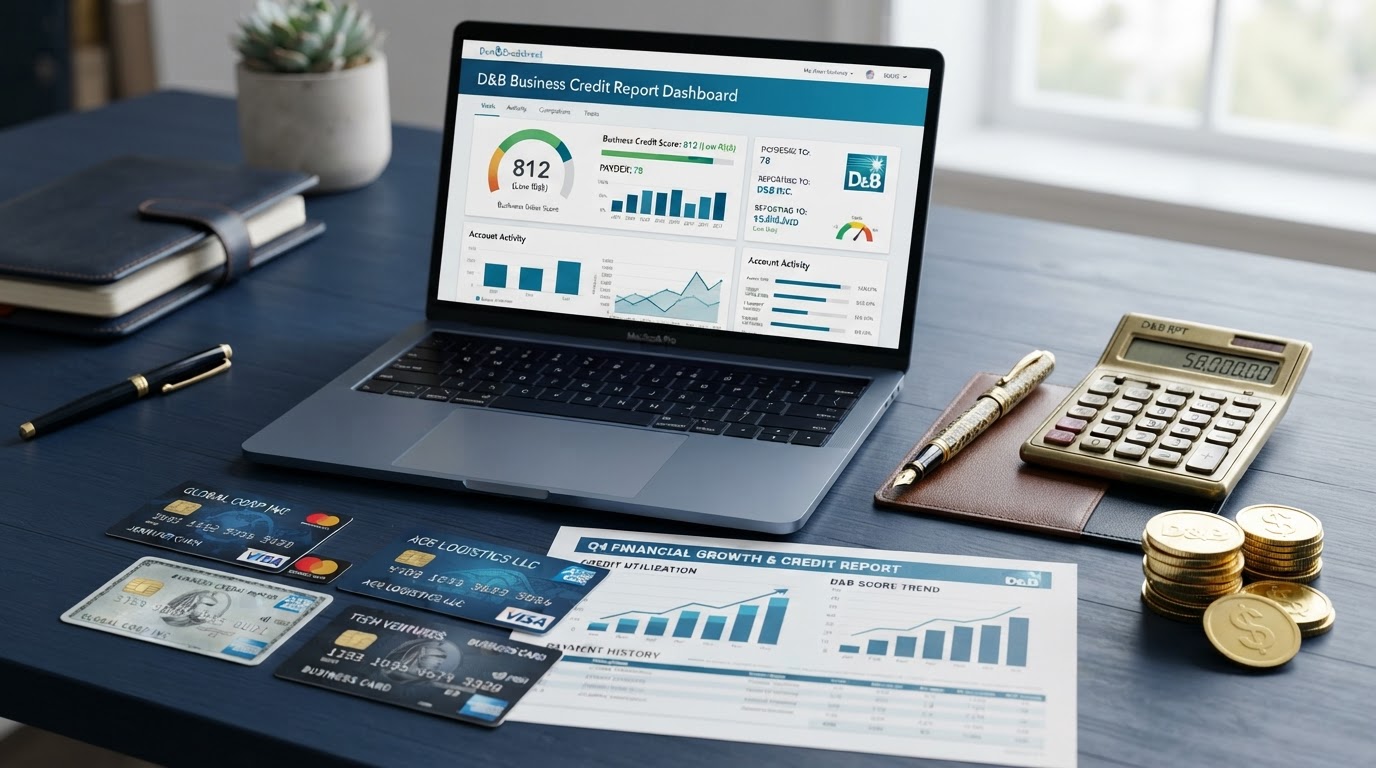
Ashley Boswell has compiled the cards that reliably report to Dun & Bradstreet, either directly or through SBFE, and that the ASAP framework uses to build a D&B file. The list includes the Ramp Business Credit Card, which reports directly to D&B; the Capital One Spark family, including the Spark 1.5% Cash Back and Spark Miles for Business; the Capital One Venture X Business Card; the Bank of America Business Advantage cards, which report via SBFE; the U.S. Bank business card family, including the Business Platinum Card, the Business Leverage Visa Signature, and the Triple Cash Rewards Visa Business; the Corpay One Mastercard; and the FNBO Business Edition Secured Mastercard. Damon Boswell notes that secured cards like the FNBO and the Valley Visa Secured Business Card are especially valuable for profiles that are too thin for unsecured approval, because they report directly to D&B while requiring only a refundable deposit.
- Ramp Business Credit Card — reports directly to D&B.
- Capital One Spark family (1.5% Cash Back, Spark Miles, Venture X Business).
- Bank of America Business Advantage cards — report via SBFE.
- U.S. Bank business cards (Platinum, Leverage, Triple Cash Rewards) — report via SBFE or direct.
- Corpay One Mastercard and FNBO Business Edition Secured Mastercard — direct reporting.
Cards That Report to All Three Bureaus
Damon Boswell places special value on cards that report to all three commercial bureaus, because a single on-time payment then lands in three files simultaneously — the most efficient way to thicken a profile. Brex reports directly to D&B and also to Experian and Equifax. FNBO's secured card reports directly to D&B, Experian, and Equifax. The AtoB Fleet Card, used in Tier 3 for trucking and logistics businesses, reports to all three. Ashley Boswell uses these multi-bureau cards strategically at the moments in the build where thickening the profile across all three bureaus at once accelerates the timeline toward Tier 4 funding.
"One on-time payment that reports to three bureaus does the work of three payments that report to one. We engineer the profile to work smarter, not just harder."
— Damon Boswell, Master Business Credit Architect
Cards That Report to Personal Credit — and Why That Matters
Ashley Boswell is careful about cards that report to personal credit bureaus, because they can undermine the entire purpose of building business credit. Many business credit cards require a personal guarantee and pull personal credit on application, and some report business card activity to consumer bureaus if the account goes delinquent. The ASAP framework is built specifically to bypass personal guarantees wherever possible, which is why Damon Boswell prioritizes cards that report to business bureaus only and do not touch personal credit. By Tier 4, the goal is no-personal-guarantee products that fund the business on its own merits — and the card selection at every earlier tier is sequenced to make that possible.
- Many business cards require a personal guarantee and pull personal credit on application.
- Some issuers report business card activity to consumer bureaus if the account goes delinquent.
- The ASAP framework prioritizes cards that report to business bureaus only.
- By Tier 4, the goal is no-personal-guarantee products that fund the business on its own merits.
How Cards Fit Into the Tier Framework
Damon Boswell sequences cards by tier. Tier 1 is built on Net-30 vendor accounts, not cards, because vendors report reliably and do not require a hard pull in many cases. Tier 2 introduces revolving store credit cards that report to the bureaus and build a revolving payment history. Tier 3 brings in fleet and fuel cards — like the AtoB Fleet Card — that demonstrate real operational spending at higher limits and report to all three bureaus. Tier 4 is where bank-level cash credit lines and term cards come into play, backed by a profile strong enough to qualify without a personal guarantee. Ashley Boswell times each card introduction to the moment the profile can absorb the hard inquiry and benefit from the reporting, never before.
Build a Profile With Cards That Actually Report
A business credit card is only a credit-building tool if it reports to the bureaus that matter — and the ASAP framework is built around the cards that do. If you are ready to build a profile with cards that actually report to Dun & Bradstreet, Experian Business, and Equifax Business, schedule a free consultation with Damon Boswell and Ashley Boswell today. We will audit your current standing, map the right cards to your stage, and show you exactly how much capital your business can qualify for — all on your EIN, with your personal credit fully protected.
Ready to build your business credit profile?
Damon Boswell & Ashley Boswell and the ASAP Business Credit team will map your business to the right tier — and show you exactly how much capital you qualify for.
Schedule Your Free Consultation