Business Credit Cards That Report to Personal Credit: The Trap Most Owners Miss
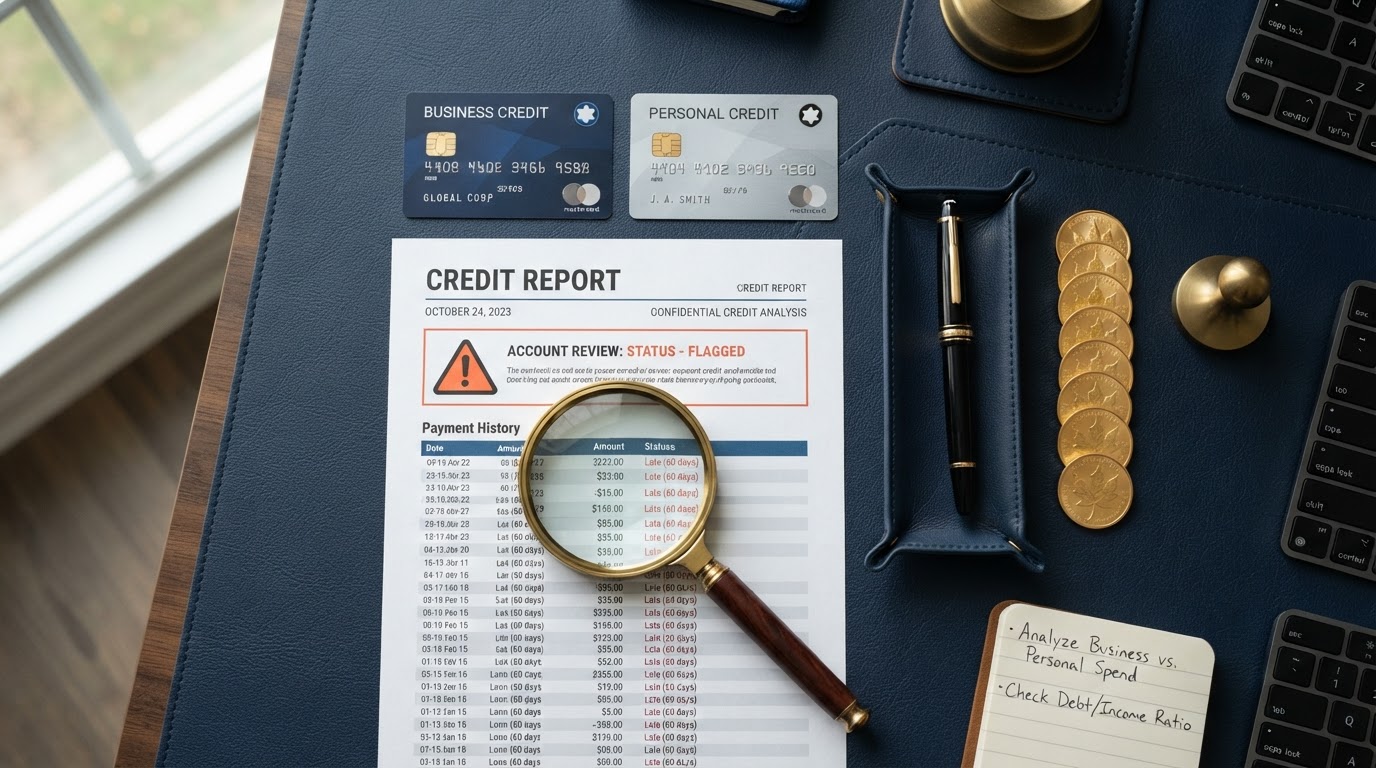
The entire promise of business credit is that the business stands on its own EIN while the personal credit stays out of the underwriting file. So it surprises nearly every owner Damon Boswell meets to learn that some of the most popular business credit cards report full account activity — balances, limits, and payment history — directly to the personal credit bureaus, every single cycle. A business card that reports to the personal file turns business spending into personal utilization overnight, and a heavy month of inventory purchases can quietly sink a personal score the owner never connected to the business card. At ASAP Business Credit, Damon Boswell and Ashley Boswell treat the reporting behavior of every card as a structural decision, not an afterthought, because the wrong card can undo months of personal credit protection in a single billing cycle. Here is which cards report what, why it matters, and how Ashley Boswell and Damon Boswell sequence cards that keep business spending where it belongs — on the business file.
The Two Moments a Business Card Touches Personal Credit
Ashley Boswell defines the two moments clearly, because owners conflate them. The first moment is the application itself — when the issuer runs a hard inquiry, almost always on the personal credit file, even for a business card. That inquiry can dip a personal score by a few points and stays on the report for about two years. The second moment is the ongoing reporting — and this is where the cards diverge sharply. Some issuers report only negative information to the personal bureaus, meaning the personal file is untouched as long as the account is in good standing. Other issuers report full activity — balances, limits, and payment history — to the personal file every cycle, which means the business card behaves like a personal card on the personal report. Damon Boswell's rule is that the first moment is unavoidable but manageable; the second moment is the one that must be engineered, because ongoing full reporting is the silent drain on the personal score.
- The application triggers a hard inquiry on the personal file, which dips the score briefly and stays for two years.
- Ongoing reporting is where cards diverge — some report only negative information, others report full activity.
- Full-activity reporting turns business spending into personal utilization every cycle.
- A heavy inventory month on a full-reporting card can quietly sink a personal score.
The Cards That Report Full Activity to Personal
Damon Boswell names the clearest exceptions because owners deserve to know. Capital One Spark revolving cards and Discover business cards are the issuers most commonly cited as reporting full account activity — including balances and payment history — to the personal credit bureaus every cycle. For these cards, how the business uses the card directly affects the personal credit score, because the balance and limit appear on the personal report and factor into personal utilization. Ashley Boswell does not call these cards bad — they can be excellent funding tools with strong rewards and limits — but she sequences them deliberately, deploying them only when the personal utilization can absorb the reporting or when the business spending pattern keeps balances low relative to limits. The trap is not the card; the trap is the owner who does not know the card reports and lets a balance ride.
"A business card that reports full activity to your personal file is not a bad card — it is a card that must be managed with the personal score in mind. The trap is not knowing it reports at all."
— Damon Boswell, Master Business Credit Architect
The Cards That Report Only Negative Information
Ashley Boswell maps the issuers that report only negative information to the personal bureaus, because these are the cards that keep business spending off the personal file as long as the account stays in good standing. American Express reports negative information only. Bank of America reports negative information only when the account is not in good standing. Chase reports negative information only on seriously delinquent accounts. U.S. Bank and Wells Fargo similarly report only seriously delinquent or negative information. For these issuers, a business owner who pays on time sees no business activity on the personal report at all — which is exactly the separation the entity was built to provide. Damon Boswell sequences these cards first in a build where personal credit protection is the priority, so the business spending builds the business file without touching the personal one.
- American Express reports negative information only to the personal bureaus.
- Bank of America reports negative information only when the account is not in good standing.
- Chase, U.S. Bank, and Wells Fargo report only seriously delinquent or negative information.
- On-time payments on these cards keep business spending entirely off the personal file.
Why Utilization Is the Silent Score Killer
Damon Boswell explains the mechanism because it is the reason full-reporting cards are dangerous. Personal credit utilization — the ratio of balances to limits on revolving accounts — is one of the heaviest weights in the personal score. When a business card reports full activity to the personal file, the business balance counts toward personal utilization. A $15,000 inventory purchase on a $20,000-limit card pushes personal utilization to 75% on that tradeline, which can drop a personal score by dozens of points even though the bill is paid in full on time. Ashley Boswell stresses that the score does not distinguish between a business purchase and a personal one — it reads only the reported balance and limit. This is why a full-reporting business card is the most common explanation for a personal score that drops for no apparent reason.
How the ASAP Framework Sequences the Cards
Ashley Boswell sequences the card strategy with the reporting behavior front and center. For clients whose priority is protecting the personal score, the framework opens cards that report only negative information first, so the business builds revolving history on the business file while the personal file stays clean. Full-reporting cards like Capital One Spark and Discover are deployed deliberately — either when the personal utilization has room to absorb the reporting, or when the spending pattern keeps balances low relative to limits. Damon Boswell also coaches clients to time large business purchases around the statement closing date, because the reported balance is the statement balance — paying it down before the statement closes keeps the reported utilization low even on a full-reporting card. The framework is not about avoiding any issuer; it is about knowing what each issuer reports and engineering the sequence so the personal score is protected at every step.
"We do not avoid any card — we sequence them. The cards that report only negative information go first, so the business builds while the personal file stays clean. The full-reporting cards come later, deployed where the personal score can absorb them."
— Ashley Boswell, Business Credit Advisor
Know What Your Card Reports Before You Swipe
A business credit card that reports full activity to the personal bureaus can quietly undo months of personal credit protection in a single billing cycle — and most owners never know it is happening. If you want to know what your current business cards report and how to sequence them to protect your personal score, schedule a free consultation with Damon Boswell and Ashley Boswell today. We will audit your current card portfolio, map the reporting behavior of each issuer, and show you exactly how the ASAP framework sequences your cards so the business builds on the EIN and the personal credit stays behind the wall the entity was built to provide.
Ready to build your business credit profile?
Damon Boswell & Ashley Boswell and the ASAP Business Credit team will map your business to the right tier — and show you exactly how much capital you qualify for.
Schedule Your Free Consultation