Business Credit Fraud and Identity Theft: How to Protect Your Profile
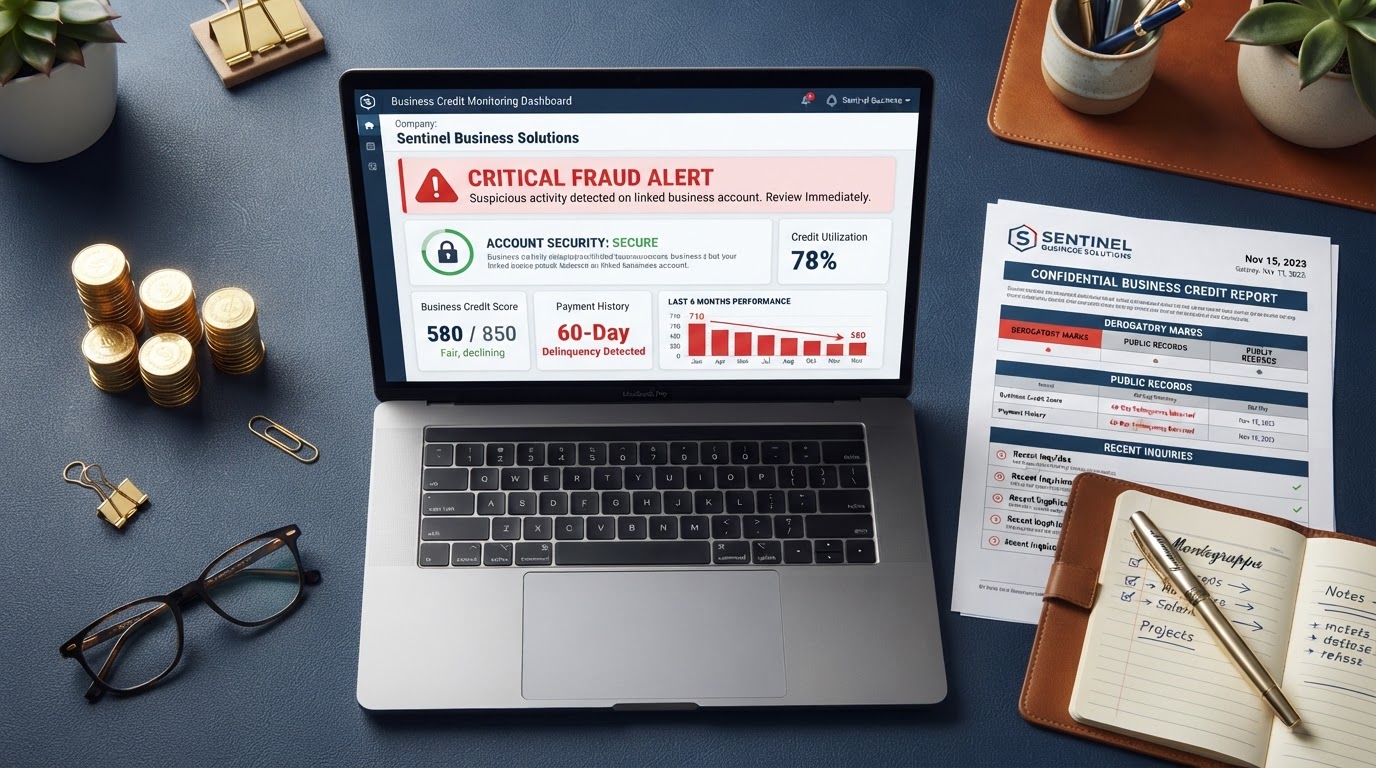
A business credit profile is an asset — and like any asset, it can be stolen. Business identity theft and credit fraud occur when criminals hijack a business's identity — its name, EIN, address, and filing history — to open fraudulent accounts, secure loans, or establish credit in the business's name, leaving the legitimate owner to discover the damage when a denial or a collection notice arrives. Damon Boswell treats business credit fraud as one of the most underappreciated risks a business owner faces, because the profile the business depends on for funding can be compromised by a criminal who never touches the business itself. At ASAP Business Credit, Damon Boswell and Ashley Boswell build the defenses that protect the profile — monitoring across all three bureaus, fraud alerts when compromise is suspected, and the discipline that catches the damage before a lender ever sees it. Here is how business credit fraud works, why it matters, and how Ashley Boswell and Damon Boswell protect the profile the business depends on.
How Business Identity Theft Actually Works
Ashley Boswell defines the threat plainly. Business identity theft occurs when a criminal obtains a business's identifying information — its legal name, EIN, address, and filing details — and uses it to impersonate the business, often by filing fraudulent changes with the Secretary of State, opening accounts with vendors, or applying for credit cards and loans. The criminal draws the funds; the legitimate business is left with the fraudulent accounts, the damaged credit, and the obligation to prove the fraud. Damon Boswell notes that businesses are often targeted precisely because their credit profiles are less monitored than personal ones — an owner who watches their personal credit score monthly may never pull their business credit report at all, which gives the fraud months to compound before it is detected. The business file is the asset, and the unprotected asset is the one most likely to be stolen.
- Business identity theft is the hijacking of a business's identity to open fraudulent accounts.
- Criminals use the business name, EIN, and filing details to impersonate the business.
- The criminal draws the funds; the legitimate business is left with the damage.
- Businesses are targeted because their credit profiles are monitored less often than personal ones.
The Warning Signs of a Compromised Profile
Damon Boswell maps the warning signs, because early detection is the entire defense. The first sign is often a tradeline or account on the business credit report that the owner does not recognize — a vendor, a credit card, or a loan the business never opened. The second is a sudden, unexplained drop in a business credit score, which can indicate a fraudulent account has been opened and gone delinquent in the business's name. The third is a denial of credit the owner expected to be approved for, which can mean the fraudulent activity has already damaged the profile. Ashley Boswell stresses that these signs are silent — the owner is not notified when a fraudulent account is opened, which means the only way to catch them is to look, and to look regularly, across all three bureaus.
"No one sends you a letter when a criminal opens an account in your business's name. The only way to catch it is to look — and to look regularly, across every bureau, before the damage reaches a lender."
— Damon Boswell, Master Business Credit Architect
The Fraud Alert on the Business Credit File
Ashley Boswell explains the tool every owner should know about, because it is the business equivalent of a personal fraud alert. If a business believes or has proof that it has become a victim of business fraud or identity theft, it can place a fraud alert on its business credit report. The alert is a message added to the company's business credit report asking that the company be notified prior to any lender extending business credit — which forces a verification step before new credit is opened in the business's name. Damon Boswell stresses that the fraud alert is not a freeze; it does not stop legitimate credit activity. It adds a checkpoint that a criminal exploiting the identity cannot pass, because the criminal cannot answer the verification the alert triggers. The alert is the first line of defense once compromise is suspected, and it should be placed the moment the warning signs appear.
Why Monitoring Across All Three Bureaus Matters
Damon Boswell connects monitoring to the defense, because monitoring is how the warning signs are caught. A business credit profile exists at three bureaus — Dun & Bradstreet, Experian Business, and Equifax Business — and fraudulent activity may appear at one before it appears at the others, depending on which bureau the fraudulent creditor reports to. Monitoring only one bureau leaves the business blind to activity reported to the other two. Experian, for example, offers identity protection alerts through technology that monitors thousands of websites and millions of data points, alerting the business if its information is found in a compromised position online. Ashley Boswell's framing is simple: monitoring is not a feature — it is the defense that catches the compromise before it reaches a funding application, and it only works when it covers all three bureaus.
- A fraud alert on the business credit report forces verification before new credit is opened.
- Fraudulent activity may appear at one bureau before the others, depending on the creditor.
- Monitoring only one bureau leaves the business blind to activity reported to the other two.
- Monitoring is the defense that catches compromise before it reaches a funding application.
How the ASAP Framework Builds the Defenses
Ashley Boswell explains how the framework treats protection, because the profile the business depends on must be defended. The framework establishes the business profile across all three bureaus, which gives the owner a baseline to monitor against. It builds active monitoring into the service, so that when a wrong item appears — or when a tradeline the owner did not open shows up — the framework sees it within a reporting cycle and initiates the response. It coaches the owner on the fraud alert process, so that the moment compromise is suspected, the alert is placed and the verification checkpoint is active. Damon Boswell also stresses the fundability connection: a business with consistent NAP data, a verifiable EIN, and a clean Secretary of State filing is harder to impersonate, because the criminal's fraudulent filings are more likely to conflict with the established, monitored identity. The framework builds the identity the bureaus recognize — and the monitoring that catches anyone who tries to misuse it.
"We build the profile the bureaus recognize, and we monitor it so the moment someone tries to misuse it, we see it. The framework is not just a build — it is a defense. The profile the business depends on is the profile we protect."
— Ashley Boswell, Business Credit Advisor
Protect the Profile Your Business Depends On
Business credit fraud and identity theft can compromise the profile your business depends on for funding — and the damage compounds silently until someone looks. If you want to protect your business credit profile, schedule a free consultation with Damon Boswell and Ashley Boswell today. We will audit your current standing across all three business bureaus, establish the baseline to monitor against, and show you exactly how the ASAP framework builds the defenses — monitoring, fraud alerts, and a recognized identity — that protect your profile from the criminals who would steal it.
Ready to build your business credit profile?
Damon Boswell & Ashley Boswell and the ASAP Business Credit team will map your business to the right tier — and show you exactly how much capital you qualify for.
Schedule Your Free Consultation