FICO SBSS Score: The Hidden 300-Point Scale Behind SBA Loan Approvals
One of the most quietly decisive numbers in all of business lending is one most owners have never heard of. Damon Boswell and Ashley Boswell find it on nearly every SBA loan denial the ASAP Business Credit team audits: the FICO Small Business Scoring Service score, better known as the SBSS. While owners obsess over their PAYDEX, their Experian Intelliscore, and their Equifax Business score, the SBSS is the score that often gates the very first automated decision on an SBA 7(a) or SBA Express application. Here is what the FICO SBSS score actually is, how the 0-to-300 scale works, why the LiquidCredit Service matters, and how Ashley Boswell and Damon Boswell prepare a profile so that score reads in the lender's favor.
What the FICO SBSS Score Actually Is
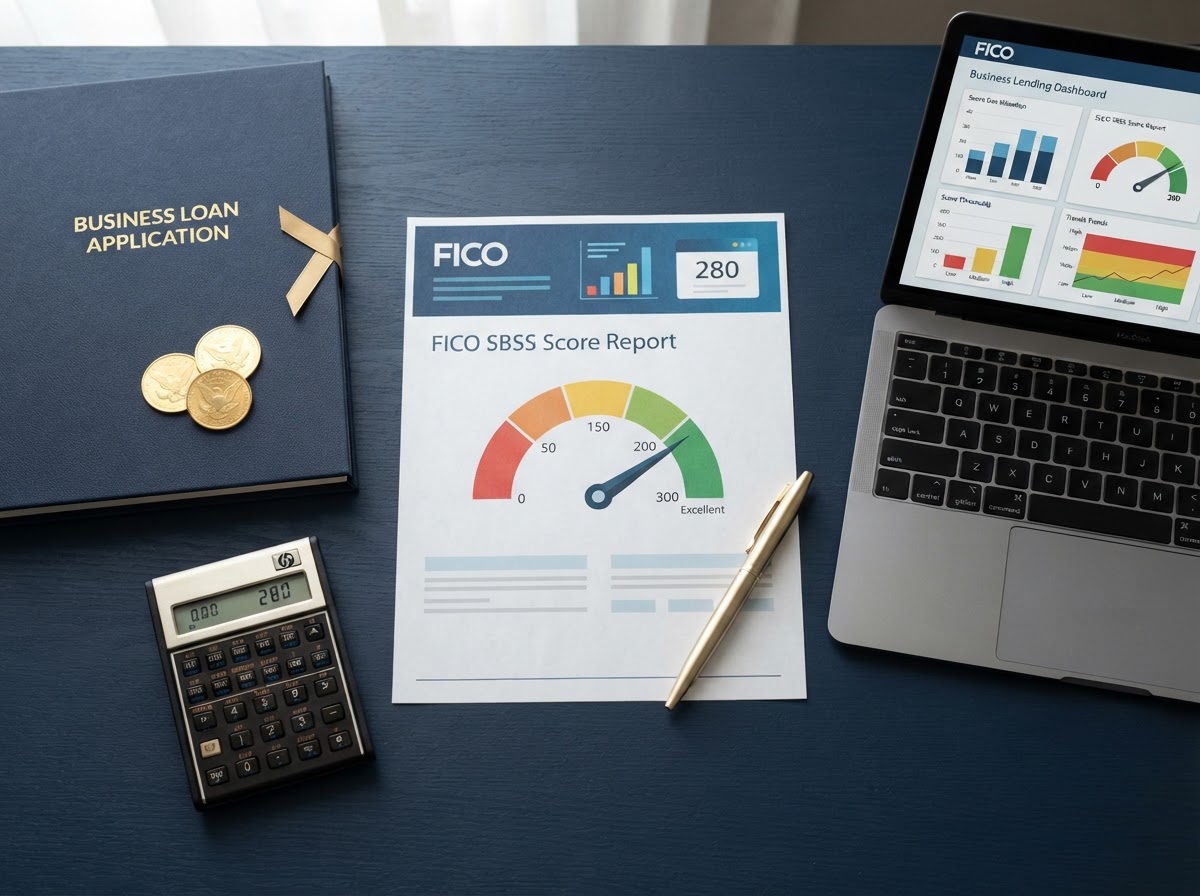
Damon Boswell starts with the fundamentals, because the SBSS confuses even experienced borrowers. The FICO Small Business Scoring Service is a blended score — meaning it combines both personal and business credit data into a single risk score. Where D&B's PAYDEX reads only business payment history, and your personal FICO reads only consumer data, the SBSS pulls from both worlds and weights them together. The result is one number on a 0 to 300 scale, where a higher score indicates lower risk to the lender. Ashley Boswell stresses that this blend is exactly why the SBSS is so powerful and so dangerous: a strong business profile will not rescue a weak personal file on an SBSS pull, and a strong personal score will not rescue a thin business file. Both have to be ready.
- The SBSS is a blended score combining personal and business credit data into one number.
- The scale runs 0 to 300 — a higher score means lower risk to the lender.
- It pulls from both worlds, so a strong business profile will not rescue a weak personal file.
- A strong personal score will not rescue a thin business file, either.
The FICO LiquidCredit Service and Why It Matters
Ashley Boswell explains the delivery mechanism, because it determines who pulls the score and how. The SBSS is delivered through the FICO LiquidCredit Service — an infrastructure platform that lets lenders pull a blended small-business score at the speed of consumer lending. That speed is the point. Where a traditional business underwrite might take weeks, a LiquidCredit pull can return an automated decision in seconds. This is the engine behind the SBA's express lending products and behind many large-bank small-business decisioning systems. Damon Boswell's takeaway for clients is blunt: by the time a human underwriter ever sees your application, the SBSS may have already decided whether it gets a fast approval, a manual review, or an automated decline. You build the profile for that score before you ever apply.
"The SBSS is the score that decides whether your application ever reaches a human. Build the profile so the machine says yes before the underwriter ever sees your name."
— Damon Boswell, Master Business Credit Architect
Where the 140 Threshold Comes From
Damon Boswell addresses the number owners ask about most. While each lender sets its own cutoff, the SBA's own underwriting guidance for many of its loan programs historically referenced a minimum SBSS score of 140 as a common benchmark for automated approval pathways. Scores above that threshold tend to flow through the express lanes; scores below it tend to trigger manual underwriting, additional documentation, or a decline. Ashley Boswell treats 140 as the floor, not the target — because the higher above the threshold you sit, the more cushion you have for the variances between lenders and the more favorable your terms tend to be. The ASAP framework is built to push a profile well past that line before a client ever applies.
- The SBA's guidance for many programs references a minimum SBSS of around 140 as a common benchmark.
- Scores above the threshold flow through express approval lanes; below it triggers manual underwriting or decline.
- Damon Boswell treats 140 as the floor, not the target — cushion above the threshold yields better terms.
- The ASAP framework pushes a profile well past that line before a client ever applies.
How the SBSS Blend Works Against a Weak File
Ashley Boswell walks through the failure mode she sees most often. An owner with a clean personal file — high FICO, low utilization, long history — assumes that personal strength will carry the SBA application. The SBSS disagrees. Because the score blends business and personal data, a thin or nonexistent business credit file drags the blended result down regardless of how strong the consumer side is. The same is true in reverse: a business with a beautiful PAYDEX of 80 and a thick D&B file will still suffer on an SBSS pull if the owner's personal credit is weighed down by late payments or maxed utilization. Damon Boswell prepares both sides of the file for every client, because the SBSS does not let you hide one behind the other.
The Five Things the SBSS Weighs
Damon Boswell keeps the model details honest, because FICO does not publish the exact weights of the SBSS the way it publishes the consumer FICO breakdown. What is publicly understood is that the score draws on a blend of business bureau data — payment history, age of accounts, tradeline count, public record and collection items — alongside personal bureau data and application information the lender supplies. Ashley Boswell maps the ASAP framework to each of these inputs deliberately: Tier 1 builds the business payment history and tradeline count, Tier 2 thickens the revolving file, Tier 3 adds operational tradelines that demonstrate real spending, and by Tier 4 the business file is strong enough that the personal side has to carry less of the blended weight.
"You cannot game a blended score. You can only build both halves of it — and the SBSS punishes anyone who tries to hide a weak side behind a strong one."
— Ashley Boswell, Business Credit Advisor
- The SBSS draws on business bureau data, personal bureau data, and lender-supplied application info.
- Business inputs include payment history, account age, tradeline count, and public record or collection items.
- The ASAP tiers map to each input: payment history and tradeline count first, then revolving thickness.
- By Tier 4 the business file carries enough weight that the personal side carries less of the blend.
Why a Strong PAYDEX Alone Won't Save an SBSS Pull
Damon Boswell confronts a frustration many owners feel when they are denied despite a perfect PAYDEX. The explanation is that the SBSS is not a D&B score. A PAYDEX of 80 means your business pays on time — it says nothing about the age, mix, or thickness of your file, and it says nothing about the personal side the SBSS also pulls. A lender using LiquidCredit is asking a different question than D&B is answering. Ashley Boswell's coaching is to stop optimizing for a single bureau score and start optimizing for the blended reality the lender actually sees. The profile that wins an SBA approval is the profile that is strong on every bureau the SBSS touches, not just the one with the prettiest number.
How the ASAP Framework Prepares You for the SBSS
Ashley Boswell sequences the ASAP framework specifically with the SBSS in mind, because the score rewards exactly the kind of deliberate, staggered build the framework is built around. Tier 1 Net-30 vendors build the business payment history and tradeline count the model reads first. Tier 2 revolving store credit adds the revolving thickness that strengthens the blend. Tier 3 fleet and fuel cards demonstrate real operational spending at higher limits, which signals a functioning business. Tier 4 bank-level funding is approached only when the business file is strong enough that the personal side — which Damon Boswell coaches every owner to keep clean, low-utilization, and dispute-free — has to carry as little of the blended weight as possible. The goal is to walk into an SBA application with a profile that makes the LiquidCredit machine say yes before a human ever sees it.
Build for the Score the Lender Actually Pulls
The FICO SBSS is the score that decides whether your SBA loan application ever reaches a human underwriter. If you are ready to build a profile that is strong on both the business and personal sides so that the blended score reads in your favor, schedule a free consultation with Damon Boswell and Ashley Boswell today. We will audit your current standing across all three business bureaus, evaluate the personal side of the blend, and show you exactly how much capital your business can qualify for — all structured to protect your personal credit and maximize the score that actually gates your approval.
Ready to build your business credit profile?
Damon Boswell & Ashley Boswell and the ASAP Business Credit team will map your business to the right tier — and show you exactly how much capital you qualify for.
Schedule Your Free Consultation