How to Read Your Dun & Bradstreet Business Credit Report: Every Score Explained
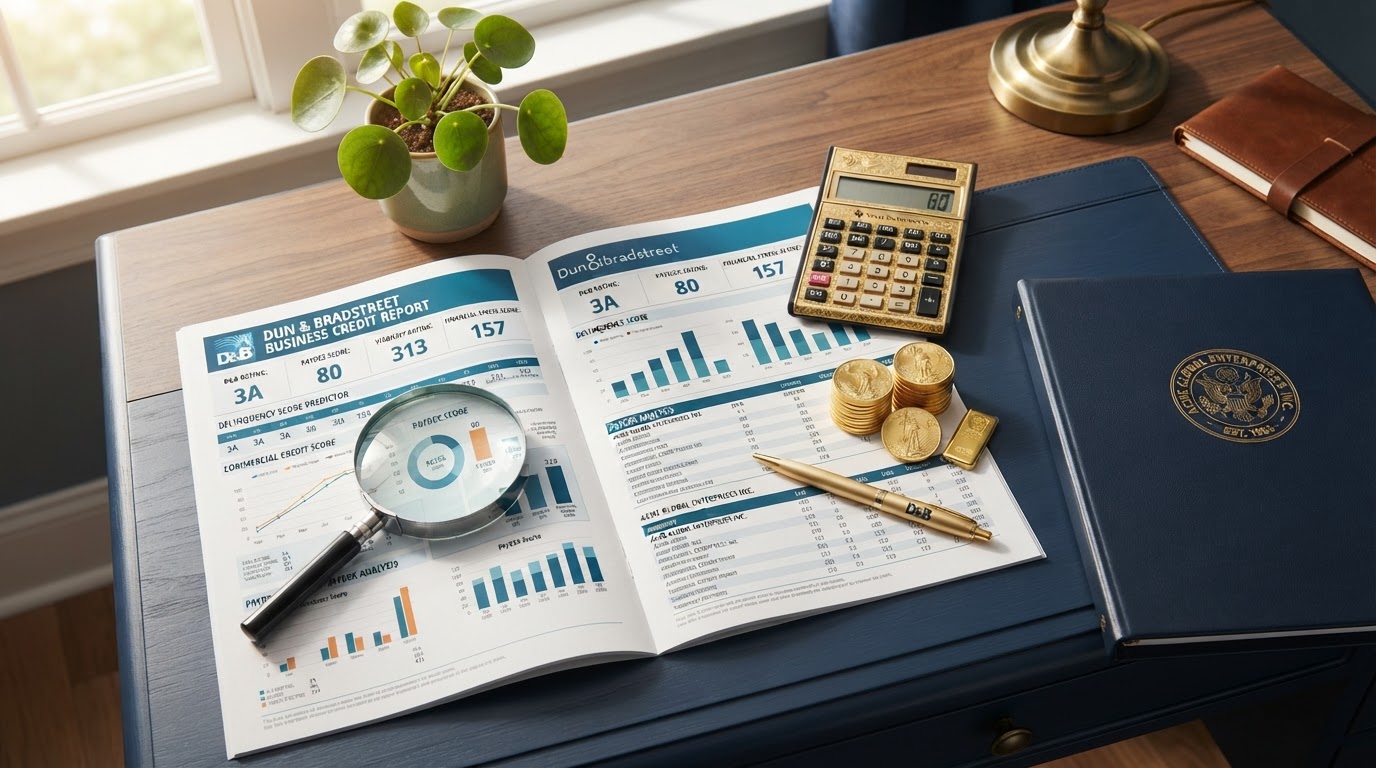
When Ashley Boswell and Damon Boswell sit down with a client for the first time, the very first document they open is the Dun & Bradstreet business credit report. Not the website, not the marketing pitch — the report itself. The reason is simple: that report is exactly what a lender, supplier, or underwriter will pull before deciding whether to extend credit to your business. If you cannot read it, you cannot control the story it tells. Damon Boswell has spent more than 25 years teaching business owners how to interpret every line of that report, and here is the complete breakdown of what each section means and how the ASAP Business Credit framework uses it to engineer funding.
Why Reading the Report Matters Before You Apply
Ashley Boswell explains that most business owners never look at their own D&B report until a lender rejects them — at which point the damage is already done. A single misrouted trade line, an outdated address, or an unverified late payment can sit on the file for months, silently dragging down scores that an underwriter interprets as risk. Damon Boswell treats the report as a diagnostic tool: we read it before every tier advancement to confirm that what should be reporting is reporting, that scores are where they need to be, and that no errors are lurking in the background. Reading the report is not a formality — it is the audit that protects every other move in the framework.
- Lenders, suppliers, landlords, insurers, and partners all pull your D&B report before extending terms.
- Errors and misrouted trade lines can sit unnoticed for months without active monitoring.
- Reading the report before applying lets you correct problems before an underwriter finds them.
- The report is the single source of truth for what the business credit world actually sees about your company.
The PAYDEX Score: Your Payment Track Record
Damon Boswell starts every report review with the PAYDEX score, because it is the metric most lenders look at first. PAYDEX is Dun & Bradstreet's dollar-weighted numerical indicator of how a business has paid its bills, based on trade experiences reported to D&B. It runs on a scale of 1 to 100, with 80 as the benchmark for on-time payment. A score of 80 means the business pays its bills on terms; 90 means it pays roughly 20 days early; 100 means it pays 30 days before terms. Scores below 80 indicate progressively later payments — 70 means about 15 days beyond terms, 50 means about 30 days beyond terms, and anything below 49 signals high risk.
"The PAYDEX looks in the rearview mirror — it tells a lender what you have already done, not what you plan to do. That is why Damon Boswell engineers early payments from day one: the rearview mirror is the only view the lender gets."
— Damon Boswell, Master Business Credit Architect
Ashley Boswell notes that generating a PAYDEX score requires at least two tradelines reporting to Dun & Bradstreet with a minimum of three total trade experiences, and roughly a six-month operating history. The score is dollar-weighted, which means larger and more recent invoices carry more weight than smaller or older ones. This is why Damon Boswell sequences tradelines carefully — a single large, clean trade experience can move the score more than several small ones, and a recent late payment weighs heavier than an old one. The score reflects roughly the past 12 months of payment history, so maintaining current positive activity matters more than any single historical blemish.
- PAYDEX ranges 1–100; 80 is the on-time benchmark, 90 means ~20 days early, 100 means ~30 days early.
- Requires at least 2 tradelines and 3 trade experiences to generate, plus roughly 6 months of history.
- Dollar-weighted — larger and more recent invoices carry more weight.
- Reflects roughly the past 12 months of payment performance.
The D&B Delinquency Predictor Score (DPS)
While PAYDEX looks backward, the Delinquency Predictor Score looks forward. Damon Boswell explains that the DPS predicts the likelihood that a business will pay in a severely delinquent manner — meaning 10% or more of its obligations 91 or more days past term — seek legal relief from creditors, or cease operations without paying all creditors in full during the next 12 months. It uses a 1 to 5 scale, where 1 indicates a low chance of delinquency and 5 indicates a high chance. Ashley Boswell stresses that the DPS is a predictive model, not a record of what happened — it weighs payment trends, public records, and industry data to forecast future behavior, which is why a declining PAYDEX can quietly erode the DPS even before any actual delinquency occurs.
The D&B Failure Score
Damon Boswell treats the Failure Score as the early warning system of the report. Formerly known as the Financial Stress Score, it predicts the likelihood that a business will seek legal relief from its creditors, cease operations without paying all creditors in full, voluntarily withdraw from business operations, go into receivership or reorganization, or make an arrangement for the benefit of creditors over the next 12 months. Like the DPS, it uses a 1 to 5 rating, where 1 suggests a low probability of failure and 5 suggests a high probability. Ashley Boswell explains that the Failure Score is what catches underlying financial stress that a decent PAYDEX might otherwise mask — a business can be paying current bills on time while quietly heading toward insolvency, and the Failure Score is designed to surface that tension before it becomes a crisis.
"PAYDEX tells you whether the business pays on time. The Failure Score tells you whether the business will still exist in twelve months. A lender reads both — and so do we, every single time."
— Ashley Boswell, Business Credit Advisor
The D&B Maximum Credit Recommendation
Ashley Boswell walks clients through the Maximum Credit Recommendation, which is one of the most practical numbers on the report for a business owner to understand. It is created by analyzing the size, industry, and payment history of a business, and it serves as a guide for companies considering extending a line of credit. Damon Boswell explains that while it is a recommendation rather than a hard limit, many banks and creditors reference it when making decisions about extending a loan or credit line. The ASAP framework is engineered to push this recommendation higher at each tier — by building larger, cleaner trade experiences and a stronger payment history — so that by the time a client approaches Tier 4 bank funding, the recommendation reflects a business capable of absorbing six-figure capital responsibly.
- The Maximum Credit Recommendation analyzes business size, industry, and payment history.
- It guides companies and banks on how much credit to extend to your business.
- It is a recommendation, not a hard limit — but lenders reference it heavily.
- The ASAP framework engineers trade experiences to push this recommendation higher at each tier.
The D&B Rating
Damon Boswell explains the D&B Rating as the report's summary judgment. It combines a company's size with its balance sheet information — assets, liabilities, and owners' equity — to create an overall rating for the business's creditworthiness. Ashley Boswell notes that this rating helps viewers make sense of all the information in a business credit report by giving an overall indication of a company's credibility at a glance. It is the number a busy underwriter may check first when deciding whether to read the rest of the report in detail, which is why Damon Boswell ensures the financial fundamentals behind it — clean books, accurate balance sheet data, and consistent reporting — are in order well before a funding push.
Trade Experiences: The Raw Data Behind the Scores
Ashley Boswell spends more time on the trade experiences section than any other part of the report, because it is the raw material every score is built from. Trade experiences are the payment records that vendors and suppliers report to Dun & Bradstreet — how much was invoiced, what the terms were, and whether the business paid on time, early, or late. Damon Boswell audits this section line by line to confirm that every tradeline the ASAP framework placed is actually reporting, that the payment terms are recorded correctly, and that no trade experience has been misrouted to the wrong file. A single missing or misattributed trade experience can mean the difference between a PAYDEX that generates and one that does not, which is why Ashley Boswell treats this section as the operational heartbeat of the entire profile.
- Trade experiences are vendor-reported records of invoice amounts, terms, and payment timing.
- Every D&B score is calculated from the trade experiences on file.
- Audit this section to confirm every tradeline is reporting and matched to the correct file.
- A missing or misrouted trade experience can prevent a PAYDEX score from generating at all.
Legal Events: Bankruptcies, Liens, and Judgments
Damon Boswell's background in legal studies makes this the section he scrutinizes most carefully. The legal events portion of the report captures bankruptcies, lawsuits, liens, judgments, and other public filings. Dun & Bradstreet collects business-related bankruptcy information from every bankruptcy court in the United States, and each bankruptcy is investigated and confirmed by an analyst before being posted to the report. D&B is also one of the few providers to feature lawsuits in its commercial credit reports. Ashley Boswell explains that a single tax lien or unsatisfied judgment can dramatically increase the probability scores of future default, because the predictive models weight recent public records heavily. This is why Damon Boswell insists on a clean legal slate before any Tier 4 application — a lingering lien can undo months of disciplined payment history in an underwriter's eyes.
"A clean payment history builds the scores. A clean legal slate protects them. One unresolved lien can erase a year of perfect payments in the eyes of an underwriter — which is why we clear the legal section before we ever apply."
— Damon Boswell, Master Business Credit Architect
Company Information and Demographic Data
Ashley Boswell reviews the company information section for accuracy every time, because inconsistent demographic data is one of the most common reasons trade lines fail to match to a profile. This section includes the legal business name, address, phone number, primary industry code, year started, employee count, and legal structure. Damon Boswell stresses that this information must be identical across the D&B file, bank accounts, vendor applications, and every other document — because the bureau uses these fields to match incoming trade reports to the correct file. At least one Dun & Bradstreet score also takes into account the completeness of company information when it is calculated, which means an incomplete profile can actively suppress scores. Ashley Boswell uses D-U-N-S Manager to update and complete this information for free whenever anything changes.
- Company information includes legal name, address, phone, industry code, year started, and legal structure.
- Inconsistent demographic data prevents trade lines from matching to your profile.
- At least one D&B score factors in the completeness of your company information.
- Use D-U-N-S Manager to update and complete company information for free.
How the ASAP Framework Uses the Report at Every Tier
Damon Boswell integrates report reading into every stage of the 4-tier system. In Tier 1, the report confirms the D-U-N-S file is open and the first Net-30 trade experiences are landing correctly. In Tier 2, the report verifies that PAYDEX has generated at 80 or above and that revolving store credit is reporting cleanly. In Tier 3, the report shows whether the higher-limit fleet and fuel cards are expanding the profile's credibility without inflating utilization. By Tier 4, Ashley Boswell reads the full report — PAYDEX, Delinquency Predictor, Failure Score, Maximum Credit Recommendation, trade experiences, and legal events — as a complete credibility package before presenting the profile to a bank underwriter. Every tier is validated against the report before the next one begins.
How to Access and Monitor Your Report
Ashley Boswell walks clients through the access options. Dun & Bradstreet offers CreditSignal, which provides a free initial view of select scores and directional change alerts, though it shows only a limited set of scores for an initial period. For full visibility into every score, rating, and trade experience, D&B offers paid monitoring products like D&B Credit Insights that include multiple scores and detailed report information. Damon Boswell also notes that business owners can ask suppliers to submit paid invoices to Dun & Bradstreet as trade references, and that some D&B products allow manual submission of trade references for review, verification, and possible acceptance. The ASAP framework handles this monitoring for clients so nothing slips — but every owner should understand what is available to them directly.
- CreditSignal offers a free initial view of select scores with directional change alerts.
- Paid products like D&B Credit Insights provide full visibility into every score and trade experience.
- Suppliers can submit paid invoices as trade references for D&B review and possible acceptance.
- Some D&B products allow manual trade reference submission to strengthen the file.
From Reading the Report to Six-Figure Funding
A Dun & Bradstreet business credit report is not a document to fear — it is a document to master. When Ashley Boswell and Damon Boswell present a profile at Tier 4, every section of that report has been read, audited, and engineered to tell the story of a stable, credible, fundable business. If you are ready to see exactly what lenders see when they pull your report, schedule a free consultation with Ashley Boswell and Damon Boswell today. We will read your full D&B report alongside you, identify every error and gap, map the corrections that will strengthen your scores, and show you precisely how much capital your business can qualify for — all on your EIN, with your personal credit fully protected.
Ready to build your business credit profile?
Damon Boswell & Ashley Boswell and the ASAP Business Credit team will map your business to the right tier — and show you exactly how much capital you qualify for.
Schedule Your Free Consultation