How Your Business Credit Score Affects Insurance Premiums and Surety Bonds
Most business owners think of business credit as the key to loans and credit cards — and stop there. But the business credit file reaches further than funding. Insurers and surety companies read the same profile, and a strong business credit score can lower commercial insurance premiums and reduce the cost of surety bonds, while a weak file can raise them. Damon Boswell treats the insurance and bonding connection as one of the most overlooked returns on a business credit build, because the savings compound year after year on every policy and every bond the business holds. At ASAP Business Credit, Damon Boswell and Ashley Boswell build the profile that earns the best rates not just from lenders but from the insurers and surety providers who quietly price the business on the strength of its file. Here is how business credit affects insurance and bonding, why a strong score lowers the cost, and how Ashley Boswell and Damon Boswell build the profile that pays off in premiums.
How Insurers Use Credit-Based Insurance Scores
Ashley Boswell explains the mechanism, because it surprises every owner the first time. Insurers may use credit-based insurance scores to help price commercial policies, and a business credit score can impact the cost of business insurance. The insurer prices the policy according to the risk the file signals, which can result in higher premiums for a business with a thin or weak credit profile and lower premiums for one with a strong, established file. The logic mirrors the lender's: a business that manages its credit responsibly is statistically more likely to manage its operations and claims responsibly, which makes it a lower risk to insure. Damon Boswell stresses that the insurer is not reading the business credit score the way a lender does — it is reading a derived insurance score — but the underlying business credit file is the raw material that score is built from.
- Insurers may use credit-based insurance scores to help price commercial policies.
- A strong business credit profile can lower commercial insurance premiums.
- A thin or weak file can result in higher premiums because it signals higher risk.
- The underlying business credit file is the raw material the insurance score is built from.
Why Surety Companies Examine Credit Closely
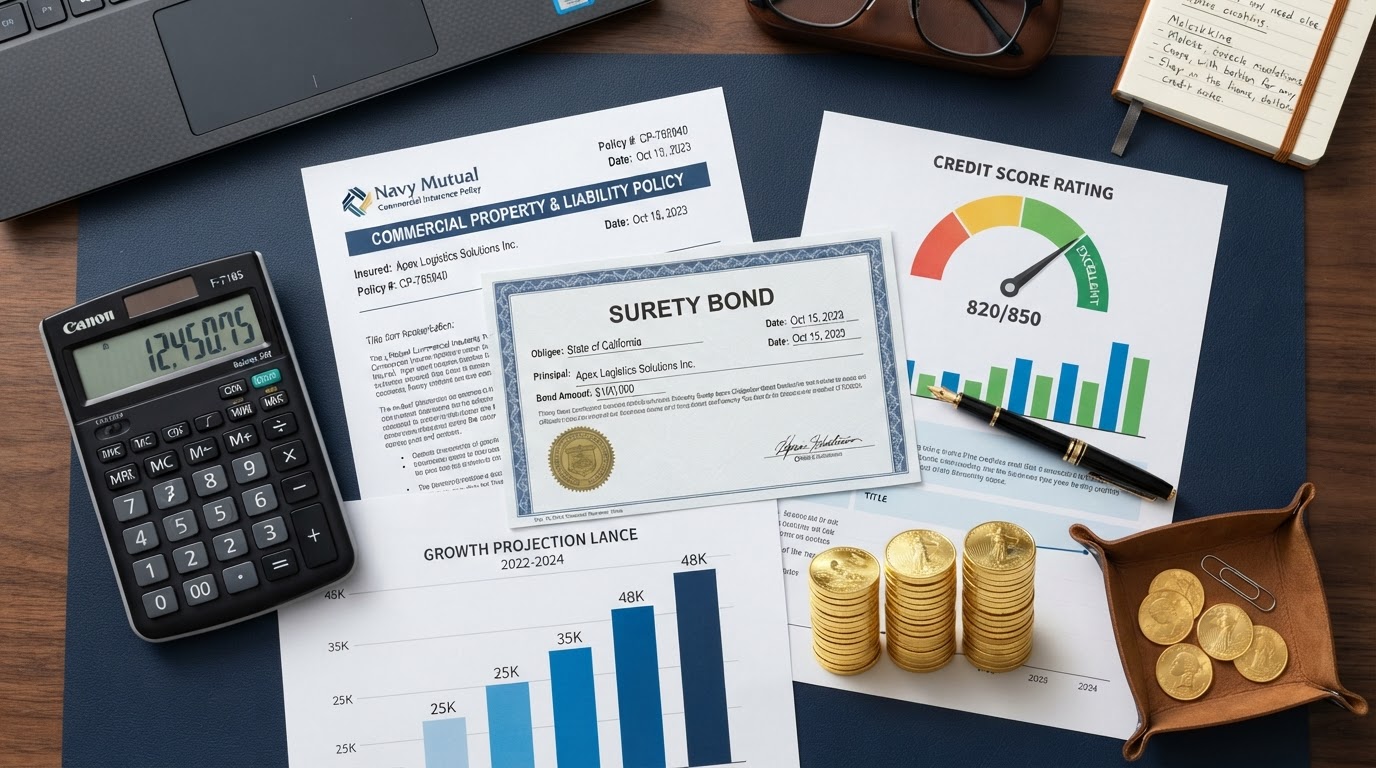
Damon Boswell turns to surety bonds, where the credit connection is even more direct. A surety bond is a three-party agreement where the surety company guarantees the principal — the contractor or business — will fulfill its obligation to the obligee. The surety is essentially extending credit, which is why the surety company examines the principal's credit closely. A strong credit score signals lower risk to the surety company, sometimes resulting in lower bond premiums for the applicant. There is no universal minimum credit score for a surety bond, but contractors with scores above 700 generally qualify for the best rates. Ashley Boswell notes that for contractors, the surety bond is often the gateway to the project itself — without the bond, there is no contract — which makes the credit file a direct factor in whether the business can take the work at all.
"A surety bond is credit by another name. The surety is guaranteeing the principal will perform, and it prices that guarantee on the strength of the credit file. A weak file does not just cost more — it can cost the contract."
— Damon Boswell, Master Business Credit Architect
The Premium Difference a Strong File Makes
Ashley Boswell quantifies the impact because the savings are real. A contractor with a credit score above 700 generally qualifies for the best surety bond rates, while a contractor with a weaker file pays a higher premium — sometimes meaningfully higher — for the same bond. The same dynamic applies to commercial insurance: a business with a strong, established credit profile can secure lower premiums, while a thin or weak file can push the business into a higher-risk pricing tier. Damon Boswell frames the cumulative effect: a business that holds a general liability policy, a commercial auto policy, a workers' compensation policy, and a surety bond is paying credit-influenced premiums on every one — and a strong file lowers the cost across the entire portfolio, year after year. The return on the credit build is not a one-time savings; it is an annual reduction that compounds.
How the ASAP Framework Builds the File Insurers and Sureties Reward
Damon Boswell maps the framework to the insurance and surety underwriting directly. The same profile that earns the best loan rates — a business entity in good standing, a verifiable EIN, reporting tradelines across all three bureaus, a clean payment history, and a strong PAYDEX — is the profile that earns the best insurance and surety rates. Tier 1 Net-30 vendors establish the payment history the insurance score reads. Tier 2 revolving credit adds depth. Tier 3 fleet and operational spending signals a functioning, revenue-generating company. By the time the business approaches a surety or insurer, the file tells the story of an established, responsible operation — which is exactly the story that earns the best price. Ashley Boswell also protects the personal file throughout, because surety underwriting often reads both the business and the personal credit of the principal, and a clean personal file strengthens the application the business file supports.
"The file that earns the best loan rate is the same file that earns the best insurance and bond rate. The framework builds it once — and the business collects the savings on every policy and every bond, every year."
— Ashley Boswell, Business Credit Advisor
Build the File That Lowers Every Premium
A strong business credit score lowers commercial insurance premiums and surety bond costs — and the savings compound across every policy the business holds. If you want to know whether your file is costing you in premiums, schedule a free consultation with Damon Boswell and Ashley Boswell today. We will audit your current standing across all three business bureaus, assess how your file reads to insurers and surety providers, and show you exactly how the ASAP framework builds the profile that earns the best rates — on loans, on insurance, and on bonds — all on the EIN, with your personal credit protected.
Ready to build your business credit profile?
Damon Boswell & Ashley Boswell and the ASAP Business Credit team will map your business to the right tier — and show you exactly how much capital you qualify for.
Schedule Your Free Consultation