NAICS and SIC Codes: How Your Industry Classification Quietly Sets Your Credit Risk
Long before a lender reads a single credit score, it reads a six-digit number that quietly tells it how risky the business is: the NAICS code, or its older cousin the SIC code. The North American Industry Classification System and the Standard Industrial Classification code describe what the business does, and lenders use that classification to sort industries into low-risk and high-risk buckets. A business in a high-risk industry faces stricter underwriting guidelines, lower limits, and outright denials that the owner never connects to the code on the filing. Damon Boswell treats the NAICS and SIC code as one of the most underappreciated levers in the entire business credit build, because the right code can open doors and the wrong code can close them before the credit file is ever read. At ASAP Business Credit, Damon Boswell and Ashley Boswell verify the classification early, so the code works for the profile rather than against it. Here is how the codes work, why they matter, and how Ashley Boswell and Damon Boswell ensure the business is classified correctly.
What NAICS and SIC Codes Actually Are
Ashley Boswell defines the codes plainly. The NAICS code is a six-digit classification system used by federal statistical agencies to classify business establishments by industry, and it replaced the older four-digit SIC code for most modern uses — though the SIC code still appears in many business credit and lending systems. The code describes the primary business activity: what the business does, what it sells, what industry it operates in. When a business registers with the Secretary of State, files taxes, or applies for credit, it selects a NAICS code that represents its primary activity. Damon Boswell stresses that the code is not a label — it is a data point every lender, bureau, and insurer references, and it carries real weight in the underwriting decision because it tells the lender what industry risk the business belongs to.
- The NAICS code is a six-digit classification of the business's primary industry activity.
- The older four-digit SIC code still appears in many business credit and lending systems.
- The code is selected at registration and referenced by lenders, bureaus, and insurers.
- It is a data point that carries real weight in the underwriting decision.
How Lenders Sort Industries Into Risk Buckets
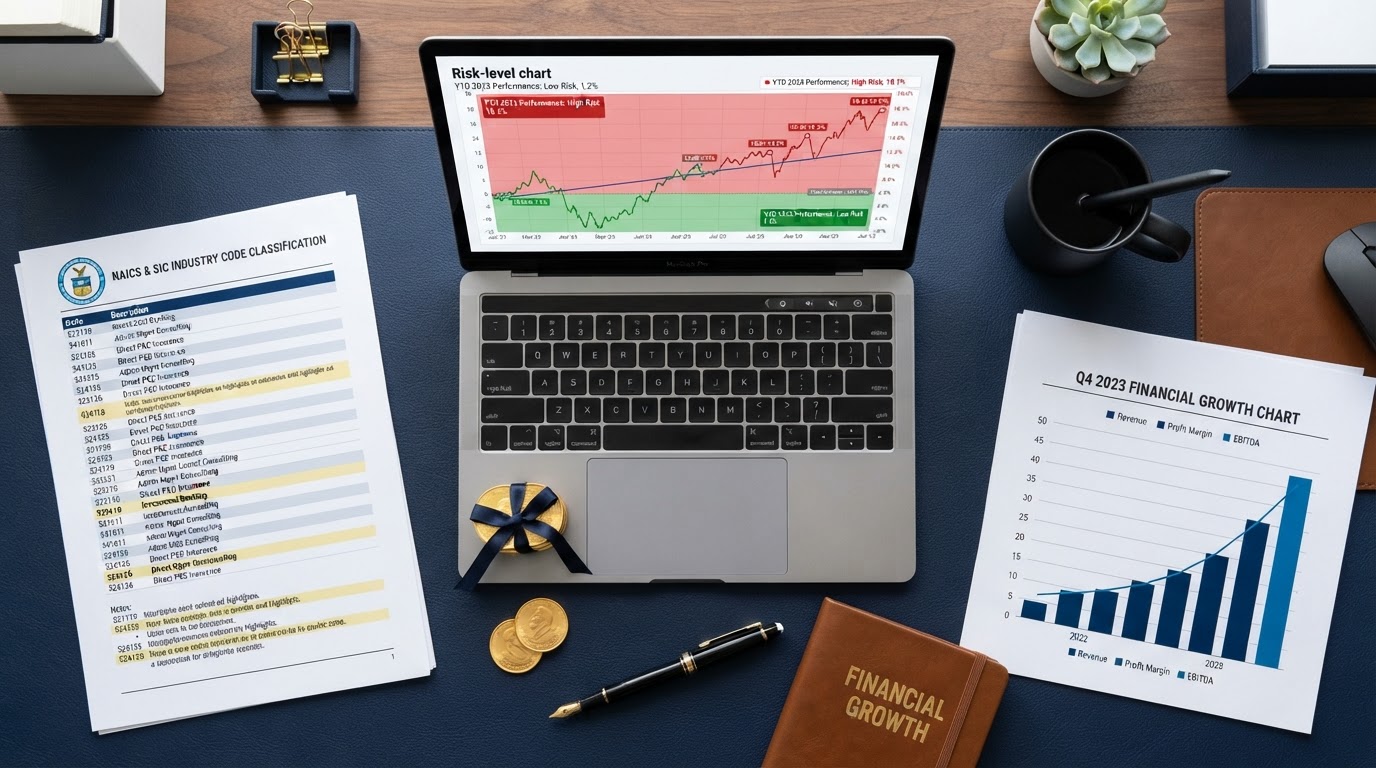
Damon Boswell explains the sorting logic, because it is the reason the code matters. Lenders maintain internal lists of low-risk and high-risk industry codes, and a business whose code lands in a high-risk bucket faces stricter underwriting guidelines — higher credit score requirements, lower limits, larger down payments, and in some cases outright automatic denials. High-risk industries commonly include those with volatile revenue, high failure rates, regulatory exposure, or cash-intensive operations. Ashley Boswell notes that the lender is not judging the individual business — it is judging the industry the code assigns the business to, which means a perfectly run company can be denied because its code places it in a bucket the lender has flagged. The code is the first filter, and a business that fails the filter never reaches the credit review.
"The lender does not read your business — it reads your code. A high-risk code is a filter the business never passes, no matter how strong the credit file behind it. The code is the first door, and the wrong code closes it before the file is ever opened."
— Damon Boswell, Master Business Credit Architect
Why the Wrong Code Gets Selected
Ashley Boswell walks through how businesses end up misclassified, because it is more common than owners think. A business owner registering an entity often selects a NAICS code from a dropdown without understanding the risk implications, choosing a code that roughly fits the activity but lands the business in a higher-risk bucket than necessary. A business that evolves over time — adding services, shifting focus — may outgrow its original code without ever updating it, leaving the file tagged with an outdated classification. A business with multiple activities must select a primary code, and the wrong primary can misrepresent the operation. Damon Boswell's point is that the code is not permanent or unchangeable — but it is rarely reviewed, which is exactly why so many businesses carry a code that quietly works against them.
How the ASAP Framework Verifies the Classification
Damon Boswell treats the code verification as part of the fundability checklist, because a misclassified business is a business that can fail the lender's first filter before the credit file is ever read. The framework reviews the NAICS and SIC code early in the build, confirms it accurately reflects the primary business activity, and ensures it places the business in the lowest-risk bucket the activity honestly supports. Ashley Boswell is clear that the framework does not manipulate the code to misrepresent the business — that is fraud — but it does ensure the code reflects the full scope of the activity and selects the primary that best represents the operation. A business that legitimately spans a lower-risk and a higher-risk activity should be classified by the activity that is both primary and lower-risk, and the framework makes sure that selection is deliberate rather than accidental.
- The framework reviews the NAICS and SIC code early in the build as part of fundability.
- It confirms the code accurately reflects the primary business activity.
- It ensures the code places the business in the lowest-risk bucket the activity honestly supports.
- A business spanning activities is classified by the primary, lower-risk activity — never misrepresented.
"We never misrepresent the business to dodge a code — but we make sure the code represents the business accurately. The right code is the one that tells the truth about what you do and places that truth in the bucket it belongs in."
— Ashley Boswell, Business Credit Advisor
Verify Your Code Before the Lender Reads It
Your NAICS and SIC code quietly sets your credit risk before a lender ever reads your file — and a misclassified business can be denied for a code it never knew was wrong. If you want to know whether your code is working for you or against you, schedule a free consultation with Damon Boswell and Ashley Boswell today. We will review your current classification, confirm it accurately reflects your primary activity, and show you exactly how the ASAP framework positions your code — and your profile — so the lender's first filter passes you through to the credit review your file deserves.
Ready to build your business credit profile?
Damon Boswell & Ashley Boswell and the ASAP Business Credit team will map your business to the right tier — and show you exactly how much capital you qualify for.
Schedule Your Free Consultation