Seasonal Business Financing: How a Line of Credit Matches Your Revenue Cycle
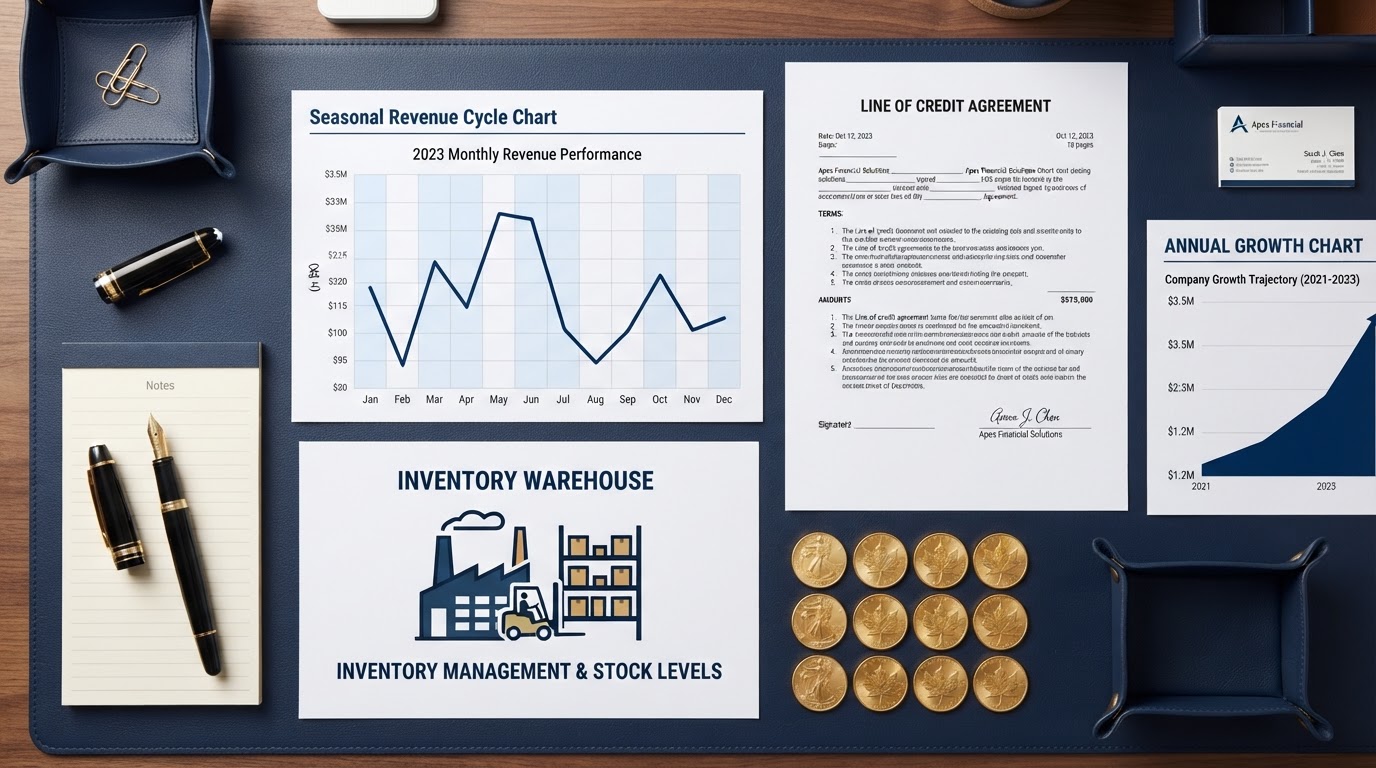
A seasonal business lives on a curve — record-high revenue in the peak season and little to nothing in the slow season, while the monthly bills, payroll, and operating expenses keep coming regardless. The mismatch between uneven revenue and fixed costs is the defining financial challenge of a seasonal business, and it is the challenge a working capital line of credit is specifically designed to solve. Damon Boswell has guided landscapers, retailers, holiday businesses, and tourism operators through the same reality: the capital structure has to match the revenue cycle, or the business strains in the slow season and misses opportunities in the peak. At ASAP Business Credit, Damon Boswell and Ashley Boswell build the profile that qualifies a seasonal business for a line of credit before the cycle demands it, so the business draws when it needs to and repays when the revenue returns. Here is how seasonal financing works, why a line of credit fits the cycle, and how Ashley Boswell and Damon Boswell build the profile that earns it.
The Core Challenge of a Seasonal Business
Ashley Boswell defines the challenge plainly. A seasonal business experiences revenue fluctuations throughout the year — busy periods that bring in record-high revenue and slow seasons with little to no revenue — while the monthly business bills, operating expenses, and financial obligations still need to be covered every month. The result is a cash flow gap: the business needs capital before the peak season to buy inventory and hire staff, and it needs capital during the off-season to cover fixed costs while revenue is thin. Damon Boswell stresses that the gap is not a sign of a weak business — it is the structural reality of a cyclical revenue model, and the financing has to be structured to match it. A conventional term loan, with fixed monthly payments, fights the cycle; a line of credit flexes with it.
- A seasonal business has record-high revenue in peak season and little in the slow season.
- Monthly bills, payroll, and operating expenses continue regardless of the revenue cycle.
- The cash flow gap is structural to a cyclical revenue model, not a sign of weakness.
- The financing structure must match the revenue cycle rather than fight it.
Why a Line of Credit Fits the Cycle
Damon Boswell explains why the line of credit is the right instrument. A working capital line of credit is a flexible financing option that gives a business access to a fixed amount of funds to cover short-term needs, and the business pays interest only on the outstanding amount borrowed. Unlike a conventional loan, which delivers a lump sum with fixed payments, a line of credit is revolving — the business draws what it needs, repays when revenue comes in, and can draw again without reapplying. Ashley Boswell notes that this revolving structure aligns with the seasonal revenue cycle: the business draws before the peak season to buy inventory and hire staff, repays as the peak revenue arrives, and draws again in the off-season to cover fixed costs. The line flexes with the cycle, which is exactly why it fits a seasonal business where a term loan does not.
"A term loan fights the cycle — fixed payments on uneven revenue. A line of credit flexes with the cycle — draw when you need it, repay when the revenue returns. For a seasonal business, the line is the instrument that matches the rhythm."
— Damon Boswell, Master Business Credit Architect
The Two Moments a Seasonal Business Needs Capital
Ashley Boswell maps the two moments, because they define the draw pattern. The first is before the peak season, when the business needs capital to purchase inventory, hire seasonal staff, and increase marketing spend — the lead-up costs that the peak revenue will later cover. The second is during the off-season, when the business needs to cover fixed operating costs — rent, payroll for core staff, insurance, equipment maintenance — while revenue is thin. Damon Boswell frames the financing need as a calculation: projected additional seasonal expenses minus the capital currently available, plus a contingency buffer. The line of credit covers both moments, because the business draws before the peak, repays from the peak revenue, and draws again in the off-season — one instrument, two uses, perfectly matched to the cycle.
When to Apply: Before the Peak, Not During It
Damon Boswell is firm about timing, because it is the mistake seasonal businesses make most often. The time to secure a seasonal line of credit is before the peak season — at minimum sixty to ninety days ahead — while the business has time to compare providers, prepare documentation, and build the profile the lender will read. Applying during the peak season, when the cash need is acute, is applying from a position of weakness: the lender sees the urgency, the business has no time to strengthen the file, and the terms reflect the pressure. Ashley Boswell coaches clients to plan capital needs before the peak season, evaluate the gap, and secure the line while the business has the runway to position the application — because the line of credit secured in calm is the line that performs in the storm.
- Secure a seasonal line before the peak season — at minimum 60 to 90 days ahead.
- Applying during the peak, when cash need is acute, is applying from weakness.
- The lender sees urgency and the terms reflect the pressure of the timing.
- The line secured in calm is the line that performs when the cycle demands it.
How the ASAP Framework Builds the Profile for a Seasonal Line
Ashley Boswell connects the strategy to the framework, because the line of credit is a Tier 4 instrument that rewards a profile built deliberately. The framework builds the business entity, establishes reporting tradelines across all three bureaus, and demonstrates a functioning, revenue-generating operation through the lower tiers — so that by the time the seasonal line is approached, the file tells the story of an established business with a cyclical but reliable revenue model. Damon Boswell also coaches clients to time the application around the strongest point in the recent cycle, so the lender reads the file at its best, and to hold the line in the business entity so the credit profile supports the application. The seasonal line is the harvest of the build — and the framework makes sure the build is complete before the cycle demands the harvest.
"The seasonal line is the harvest. You do not harvest in the storm — you harvest from a field you planted in calm. The framework plants the profile before the cycle demands the draw, so the line is there when the business needs it."
— Ashley Boswell, Business Credit Advisor
Build the Profile Before the Cycle Demands It
A working capital line of credit is the financing instrument that matches a seasonal revenue cycle — but it rewards a profile built before the cycle demands it. If you run a seasonal business and want to position it for a line of credit, schedule a free consultation with Damon Boswell and Ashley Boswell today. We will audit your current standing across all three business bureaus, map the draw pattern your cycle requires, and show you exactly how the ASAP framework builds the profile that qualifies your business for a seasonal line — so the capital is there when the cycle calls, all on the EIN, with your personal credit protected.
Ready to build your business credit profile?
Damon Boswell & Ashley Boswell and the ASAP Business Credit team will map your business to the right tier — and show you exactly how much capital you qualify for.
Schedule Your Free Consultation