Tradeline Seasoning: Why Time Is the One Thing You Cannot Fast-Forward
Of every factor that shapes a business credit profile, the one Damon Boswell tells clients they cannot engineer around is time. Tradeline seasoning — the age and history of an account that reports to the business credit bureaus — is built month by month, cycle by cycle, and there is no legitimate shortcut that compresses it. A tradeline opened today is a new tradeline today, and it will be a six-month tradeline in six months and a two-year tradeline in two years, regardless of how strong the rest of the profile is. At ASAP Business Credit, Damon Boswell and Ashley Boswell treat seasoning as the backbone of the build, because the bureaus and lenders reward accounts that have demonstrated payment reliability over time — and the framework's discipline is what turns the passage of time into a profile that grows stronger every month. Here is what seasoning is, why it matters, why closing accounts too early damages it, and how Ashley Boswell and Damon Boswell build it deliberately.
What Tradeline Seasoning Actually Is
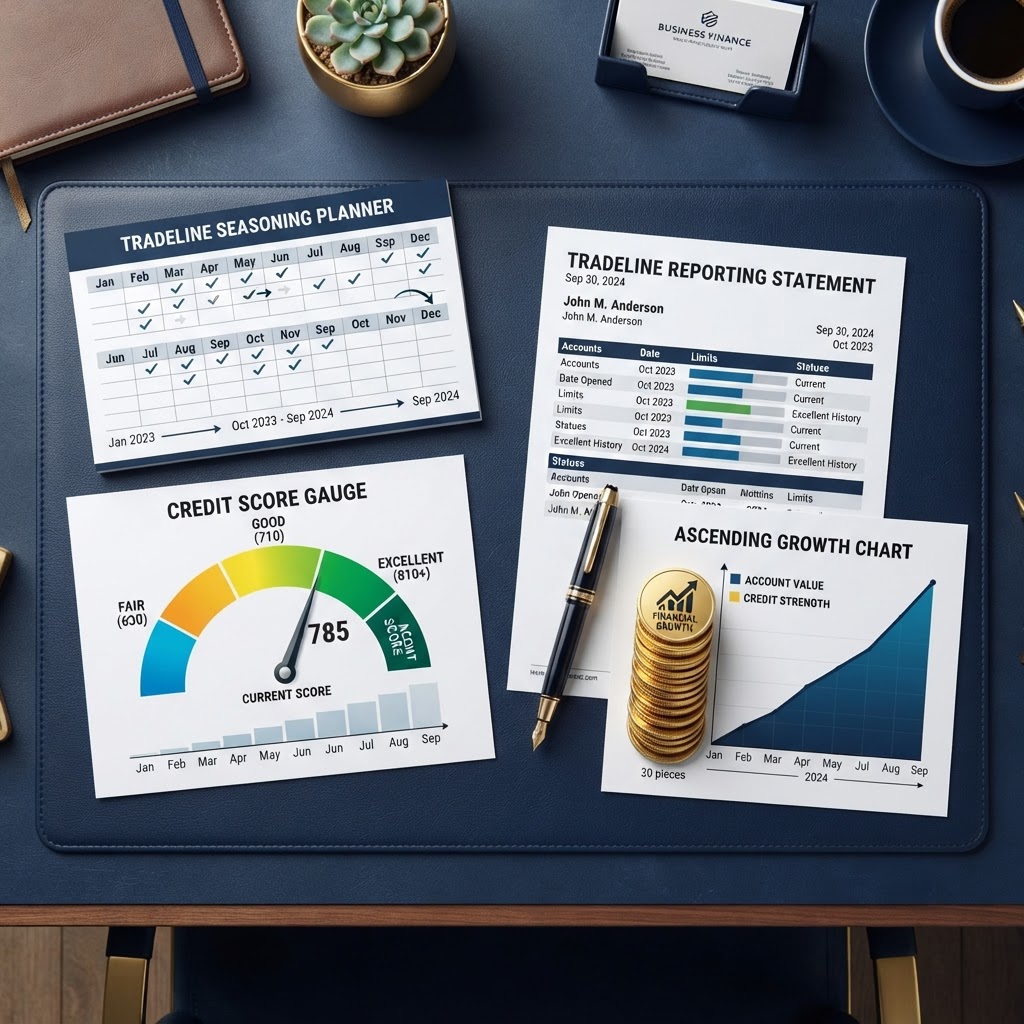
Ashley Boswell defines it plainly. Tradeline seasoning is the age and payment history of an account that reports to a business credit bureau, measured from the date the account was opened and the length of time it has reported on-time payments. A seasoned tradeline is one that has been open and reporting for a meaningful period — often six months or more — with a consistent record of on-time payments. Damon Boswell stresses that seasoning is not a single number; it is the combination of the account's age, the length of its payment history, and the consistency of that history. A tradeline opened three months ago with three on-time payments is seasoning; a tradeline opened three years ago with three years of on-time payments is seasoned — and the bureaus and lenders read the difference.
- Seasoning is the age and payment history of a reporting account, measured from the open date.
- A seasoned tradeline has been open and reporting on-time for a meaningful period — often six months or more.
- It combines the account's age, the length of its payment history, and the consistency of that history.
- Bureaus and lenders distinguish between a seasoning tradeline and a seasoned one.
Why Bureaus and Lenders Reward Seasoned Accounts
Damon Boswell explains the logic, because it is the reason seasoning matters. The bureaus and lenders reward seasoned accounts because a long record of on-time payments is the strongest evidence the business will continue to pay on time — which is exactly what the scores and the underwriting decisions are trying to predict. A new tradeline tells the lender the business has credit but not yet a track record; a seasoned tradeline tells the lender the business has credit and a demonstrated history of managing it. Ashley Boswell notes that many vendors and credit card issuers will increase limits after six months of on-time payments, which is the seasoning threshold where the account begins to work harder for the profile. The longer the seasoning, the more the tradeline contributes to the overall age of the credit profile — and the overall age is itself a factor the bureaus reward.
"A new tradeline says the business has credit. A seasoned tradeline says the business has a track record. The lender is not predicting whether you have credit — the lender is predicting whether you will pay. Seasoning is the evidence."
— Damon Boswell, Master Business Credit Architect
Why Closing Accounts Too Early Damages the Profile
Ashley Boswell addresses the most common mistake, because it is the one that quietly erodes the profile. Older tradelines contribute to the overall age of the credit profile, which means closing accounts shortly after opening them — or closing seasoned accounts to simplify — removes the very history the bureaus reward. A business that opens a Net-30 vendor account, uses it for a few months, and closes it loses both the reporting and the age that account would have contributed over time. Damon Boswell's rule is that a tradeline, once opened and reporting, should be kept open and active for as long as it is useful — because the seasoning compounds, and an account that is five years seasoned is worth far more to the profile than five accounts that are one year seasoned. The framework builds tradelines to keep, not to churn.
Why Time Cannot Be Fast-Forwarded
Damon Boswell is direct about the limitation, because the marketing never is. There is no legitimate way to fast-forward seasoning. A tradeline opened today will not be seasoned tomorrow, next week, or next month — it will be seasoned in the future, after the months of on-time payments have accumulated. The pitches that promise instant aged credit rely on purchased tradelines or shelf-company shortcuts that lenders and bureaus increasingly detect, and the moment that detection occurs, the entire profile is compromised. Ashley Boswell's framing is honest: the time it takes to season a tradeline is the time it takes to build real history, and real history is the only history that survives underwriting. The framework does not sell a shortcut; it sells the discipline that turns the passage of time into a profile that grows stronger every month.
- Older tradelines contribute to the overall age of the profile — closing them removes that history.
- A five-year seasoned account is worth more than five one-year seasoned accounts.
- There is no legitimate way to fast-forward seasoning — it accumulates month by month.
- Purchased tradelines and shelf-company shortcuts are detected and compromise the profile.
How the ASAP Framework Builds Seasoning Deliberately
Ashley Boswell explains how the framework treats time, because the discipline is what separates a profile that seasons from one that stalls. The framework opens tradelines early in the build — Tier 1 Net-30 vendors first — specifically so they begin seasoning from day one, accumulating the months of on-time payment history the bureaus reward. It keeps those tradelines open and active, using them for small recurring purchases and paying them on time every cycle, so the seasoning compounds. It adds tradelines in sequence through the tiers, so the profile builds depth over time rather than all at once. Damon Boswell coaches clients that the timeline is the asset — every month that passes with on-time payments is a month the profile strengthens, and the framework's job is to make sure every one of those months is spent building rather than repairing. Building business tradelines is a marathon, not a sprint, and the framework paces it correctly.
"The timeline is the asset. Every month of on-time payments is a month the profile strengthens — and the framework's job is to make sure every one of those months is spent building, not repairing. Seasoning is the reward for the discipline."
— Ashley Boswell, Business Credit Advisor
Build Seasoning the Right Way — Starting Now
Tradeline seasoning is the one factor in a business credit profile that cannot be fast-forwarded — and the sooner the build begins, the sooner the profile is seasoned. If you want to start building the seasoning your profile needs, schedule a free consultation with Damon Boswell and Ashley Boswell today. We will audit your current standing across all three business bureaus, map the tradelines your profile still needs, and show you exactly how the ASAP framework builds seasoning deliberately — so every month that passes makes your profile stronger, all on the EIN, with your personal credit protected.
Ready to build your business credit profile?
Damon Boswell & Ashley Boswell and the ASAP Business Credit team will map your business to the right tier — and show you exactly how much capital you qualify for.
Schedule Your Free Consultation