UCC-1 Filings: How a Lien You Forgot About Can Quietly Block Your Funding
One of the most surprising moments in a consultation happens when Ashley Boswell and Damon Boswell pull a client's business credit report and point to a line the owner has never noticed: a UCC-1 filing from a lender they worked with years ago. The business owner is confused because their scores look fine. Damon Boswell understands that confusion — and he also knows it is exactly why that filing can quietly block a Tier 4 funding round. At ASAP Business Credit, we treat UCC-1 filings as one of the most overlooked obstacles to six-figure capital, because they do not show up in your score, but they show up everywhere a lender looks.
What a UCC-1 Filing Actually Is
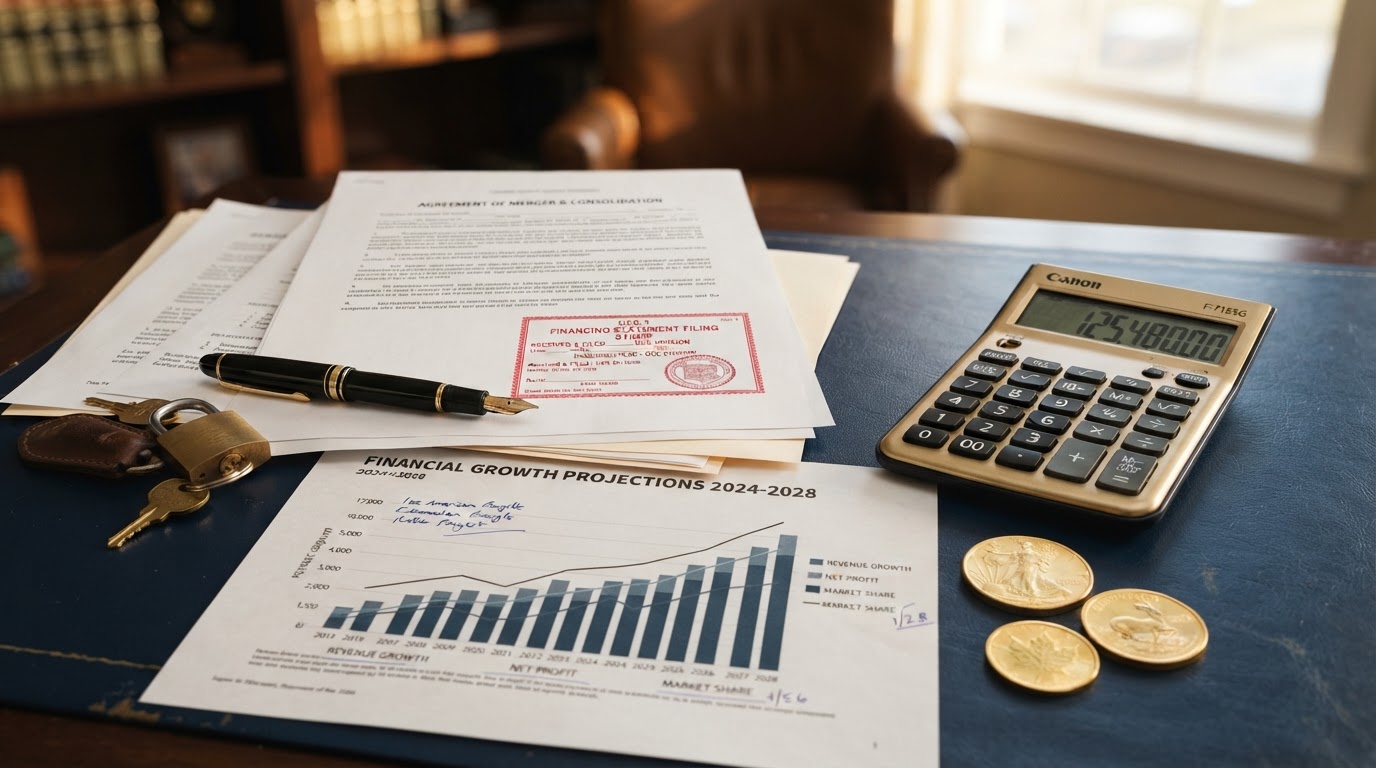
A UCC-1 financing statement is a legal form a lender files to publicly claim an interest in your business assets as collateral for a loan or lease. Damon Boswell explains it to clients as a public record that says 'this lender has first claim on these assets if the business defaults.' The filing is recorded at the state level, usually with the Secretary of State, and it appears on your business credit report from bureaus like Dun & Bradstreet and Experian Business as an informational notation. It is not a tax lien or a judgment — it is a consensual lien, meaning you agreed to it when you accepted the financing.
- A UCC-1 is a public financing statement a lender files to claim a security interest in your business assets.
- It is consensual — you agreed to it when you accepted the loan, lease, or equipment financing.
- It appears on business credit reports from Dun & Bradstreet, Experian Business, and Equifax Business as an informational notation.
- Filings are recorded at the state level, typically with the Secretary of State where your business is registered.
Why It Doesn't Lower Your Score but Still Blocks Funding
This is the part that trips up most business owners. Ashley Boswell regularly reviews reports where a client's PAYDEX score is a clean 80, their Experian Intelliscore is strong, and their Equifax metrics look solid — yet a lender still denies the application. The reason is the UCC-1. Damon Boswell explains that UCC filings do not directly affect business credit scores; they appear as informational notations with no inherent negative weight. But when Lender B pulls your report and sees that Lender A already filed a UCC lien against your assets, Lender B realizes they would have to take second position behind Lender A. For many lenders, that second position is too risky, and the application is denied before the score ever enters the conversation.
"A UCC filing won't touch your score, but it will touch your approval. Lenders do not lend on assets someone else already claimed."
— Damon Boswell, Master Business Credit Architect
Blanket Liens vs. Specific Collateral
Damon Boswell walks clients through the two ways a UCC-1 can be filed. A specific collateral filing names particular assets — a piece of equipment, a vehicle, a specific inventory batch — and only those assets are encumbered. A blanket lien, by contrast, names all of your business assets, which means every piece of equipment, inventory, and account receivable is claimed by that lender until the debt is satisfied. Ashley Boswell treats blanket liens as the more serious obstacle because they leave no unencumbered assets for a new lender to secure against, which is why they are the filings most likely to stop a Tier 4 application cold.
- Specific collateral filings encumber only the named assets — a piece of equipment or a vehicle.
- Blanket liens claim all business assets, leaving nothing unencumbered for a new lender.
- Blanket liens are the most common reason a lender refuses to take second position.
- Even after the underlying debt is paid, the lien remains active until a termination is filed.
The Zombie Lien Problem
Ashley Boswell has a name for the filings that cause the most damage: zombie liens. These are stale UCC-1 filings from loans that were paid off years ago, but the original lender never filed a UCC-3 termination to release the claim. The lien is legally dead, but it still appears on your report as active, and it still scares off new lenders. Damon Boswell has seen clients lose funding rounds because of a zombie lien from an equipment lease they settled three years earlier — the lender simply forgot to file the termination, and nobody checked until the underwriter did.
"A zombie lien is a debt you already paid that still haunts your report. We find them, we kill them, and we make sure your file only shows what is real."
— Ashley Boswell, Business Credit Advisor
How to Find UCC Filings on Your Business
Damon Boswell starts every UCC audit the same way: he searches the Secretary of State's UCC database in the state where the business is registered. Most states offer a free online search tool where you can look up filings by debtor name. Ashley Boswell also reviews the business credit reports from all three bureaus — Dun & Bradstreet, Experian Business, and Equifax Business — because UCC filings appear there as well, often alongside other public records. Cross-referencing both sources is important, because a filing that shows up on a state search may not yet appear on a bureau report, and vice versa.
- Search the Secretary of State's UCC database in your business's registration state — most are free.
- Review your Dun & Bradstreet, Experian Business, and Equifax Business reports for UCC notations.
- Cross-reference both sources, since filings can appear in one place before the other.
- Note the filing date, the secured party, and whether the filing is specific or blanket.
How to Remove a UCC Filing
Removing a UCC-1 filing requires a UCC-3 termination statement, and Ashley Boswell walks clients through exactly who is responsible for filing it. If the underlying debt is paid in full, the original lender is legally obligated to file the termination — but Damon Boswell has learned never to assume they will do it on their own. He contacts the lender directly, requests written confirmation that the obligation is satisfied, and follows up until the UCC-3 termination is filed and the lien is released from the state record. Only then does the notation come off the business credit report, which is why Ashley Boswell treats the follow-through as non-negotiable.
Why This Matters Before Tier 4
Damon Boswell sequences the UCC audit before any Tier 4 bank-level funding application goes out, because a clean asset position is part of what makes an underwriter say yes. Tier 4 funding — the $50,000 to $1.5M+ in cash credit and term loans — often requires the lender to secure against your business assets. If a prior lender's UCC-1 is still on file, the new lender cannot take first position, and the application stalls regardless of how strong your PAYDEX, Intelliscore, or Equifax scores are. Ashley Boswell makes sure the asset side of your profile is as clean as the score side before a single application is submitted.
"Your scores tell the lender you pay your bills. A clean UCC record tells the lender your assets are free to secure. Tier 4 needs both."
— Damon Boswell, Master Business Credit Architect
From a Clean Asset Record to Six-Figure Funding
A UCC-1 filing is not a sign of failure — it is a normal part of business financing that simply has to be managed and cleared when the obligation ends. Ashley Boswell and Damon Boswell treat the UCC audit as a standard step in the ASAP Business Credit framework, because a single zombie lien can undo months of disciplined tradeline building. If you are ready to make sure your business credit profile is clean from top to bottom — scores, tradelines, and asset records alike — schedule a free consultation with Ashley Boswell and Damon Boswell today. We will audit your UCC filings across every bureau and state database, clear any liens that should already be gone, and show you exactly how much capital your business can qualify for on its EIN, with your personal credit fully protected.
Ready to build your business credit profile?
Damon Boswell & Ashley Boswell and the ASAP Business Credit team will map your business to the right tier — and show you exactly how much capital you qualify for.
Schedule Your Free Consultation